

On June 3, 1977, Ann Druyan sat for an hour-long recording session in New York while instruments captured the electrical activity of her brain and body. Two days earlier, she and Carl Sagan had decided over the telephone that they would marry. During the recording, she followed a mental script about Earth, life, civilization, war, poverty, children, parents, and love.
That hour was electronically compressed into roughly one minute of sound and added to the Voyager Golden Record, the gold-plated copper disc fixed to both Voyager spacecraft in 1977. The result is not a song or a spoken message. It is a human body in love, translated into crackles and pulses and sent beyond the heliosphere.
Voyager 1 launched from Cape Canaveral on September 5, 1977. It is now more than 15 billion miles, or more than 25 billion kilometres, from Earth, according to NASA’s Voyager mission tracker. The signal takes more than 23 hours to travel one way.
The hour that became a message to the stars
Druyan was 27 years old and serving as creative director of the Voyager Interstellar Message Project. Sagan chaired the committee that selected what the records would carry. The team assembled music, greetings in 55 languages, natural sounds, and 115 images intended to give a possible finder some compressed account of Earth.
The recording of Druyan’s brainwaves came from her own idea. As she later recalled in NASA’s account of the story, she wondered whether a civilization millions of years older than ours might someday be able to decode the patterns of thought from an electroencephalogram.
With help from Timothy Ferris, she contacted Dr. Julius Korein of the New York University Medical Center and set up the hour-long session. She prepared what she called a mental itinerary, moving through geological time, living things, human ideas, social problems, and the experience of love.
What changed the recording was the phone call on June 1. Druyan and Sagan had been working together intensely on the record when they realized, without a date or a conventional courtship scene, that they were in love. Two days later, the feeling was still moving through her body while the instruments ran.
How brainwaves became a groove on a record
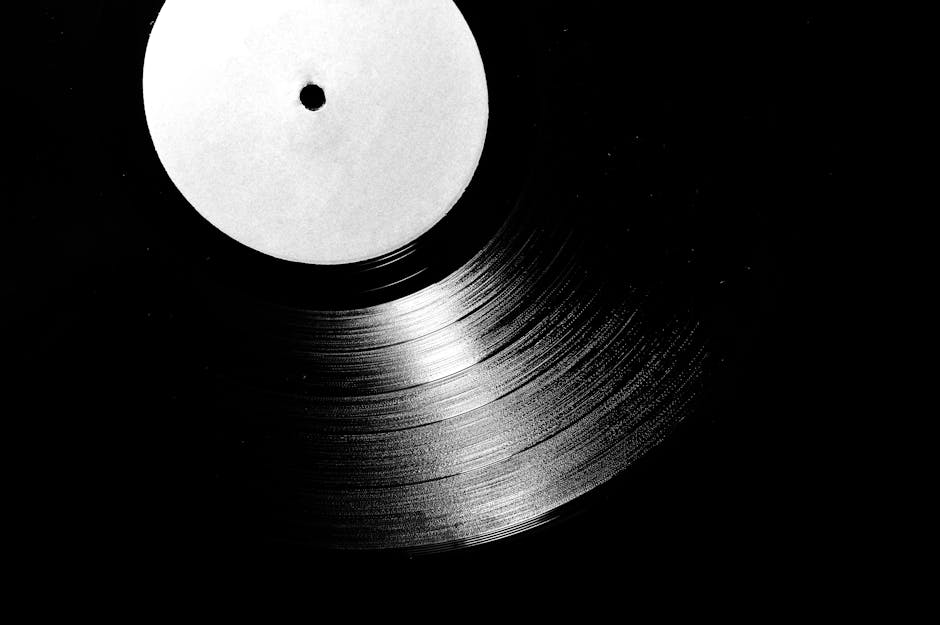
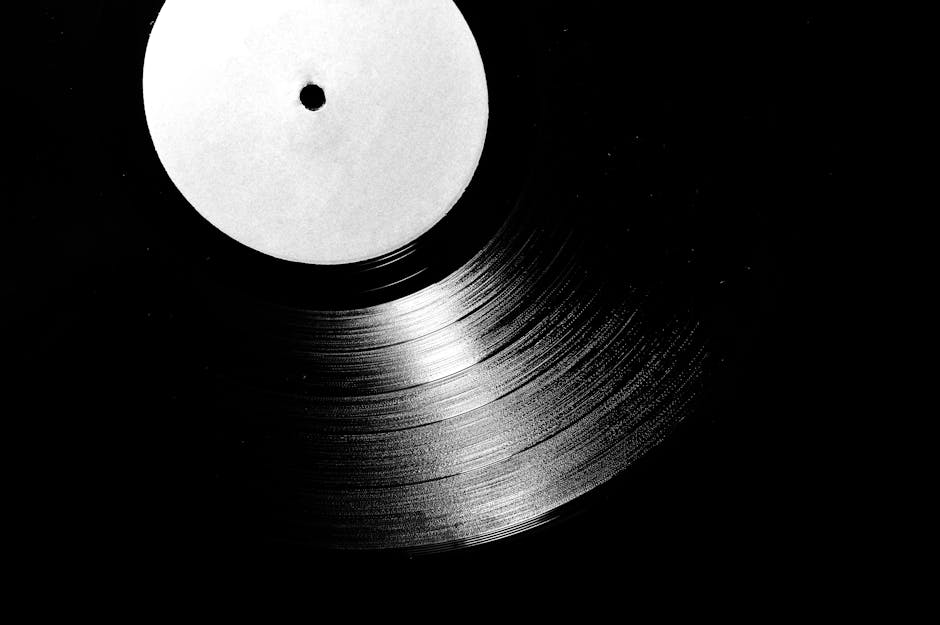
The Golden Record was a 12-inch, gold-plated copper phonograph disc. NASA’s record carries sounds from Earth, spoken greetings, images encoded as audio signals, and about 90 minutes of music. Its music selections include Bach, Beethoven, a Navajo night chant, and Chuck Berry’s “Johnny B. Goode.”
Druyan’s hour was not preserved as an hour. It was compressed into about a minute, a dense burst of sound that NASA’s later account compared to exploding firecrackers. To a human ear, it does not announce its meaning. It sounds like electrical weather.
The idea was not that a person in 1977 could listen to it and hear thoughts. The hope was that a much older intelligence, if it ever recovered the spacecraft and understood the record, might identify biological signals and try to read them as data.
That possibility remains remote in every direction. The spacecraft is tiny against interstellar space. The record may never be found. Even if it is found, the translation from electrical pattern to lived feeling may remain impossible.
The record also carries its own clock
The cover of the Golden Record is not decorative. It is an instruction sheet etched into metal. NASA’s description of the cover explains the stylus diagram, playback speed, image-decoding instructions, hydrogen atom reference, and pulsar map.
There is also a small source of uranium-238 electroplated onto the cover. Uranium-238 has a half-life of about 4.51 billion years. By comparing the remaining uranium with its daughter products, a finder could estimate how much time had passed since the uranium was placed aboard the spacecraft.
That turns the cover into a clock. The record carries a heartbeat and a timestamp: one marking a private afternoon in New York, the other marking the year a technological species first sent this particular message outward.
For more context on that radioactive timestamp, this site has also covered the uranium patch built into the Voyager Golden Record cover. The same spacecraft also carried the instructions that made the record playable in principle, even far from any human machine.
Voyager is still alive, but losing power
Almost five decades later, Voyager 1 is still operating on a shrinking supply of electricity. Its radioisotope thermoelectric generators convert heat from decaying plutonium into power, but NASA says the spacecraft loses about four watts each year.
That decline has forced the mission team to shut down heaters and instruments one by one. In April 2026, NASA engineers sent commands to shut down Voyager 1’s Low-energy Charged Particles experiment, or LECP, to preserve the spacecraft’s remaining life.
The LECP had operated almost continuously since Voyager 1 launched in 1977. It measured ions, electrons, and cosmic rays, including particles in the region beyond the heliosphere. NASA said Voyager 1 still had two remaining operating science instruments after that shutdown: one listening to plasma waves and one measuring magnetic fields.
The command itself had to cross more than 15 billion miles of space. NASA said it would take about 23 hours to reach the spacecraft, and the shutdown process would take several more hours after arrival.
The probe’s age has become part of the story. This site has also covered how Voyager still depends on 1970s-era spacecraft code, maintained by engineers working with systems from another computing age.
The math of distance
Voyager 1 crossed into interstellar space in 2012. Voyager 2, which launched first on August 20, 1977, crossed into interstellar space in 2018. Both carry identical Golden Records.
Voyager 1 has been the farthest human-made object since 1998, when it overtook Pioneer 10. It is moving at roughly 38,000 miles per hour and will keep drifting long after its transmitter falls silent.
In about 40,000 years, Voyager 1 will pass within about 1.6 light-years of the star Gliese 445 in the constellation Camelopardalis. It is not aimed at that star in any practical sense. It will simply pass nearby on a long, silent trajectory.
Voyager 1’s distance has already produced one of NASA’s most famous images. In 1990, it turned back toward the inner solar system and photographed Earth as the “Pale Blue Dot,” a story this site has covered in a separate piece on Sagan’s long campaign for the distant Earth portrait.
Sagan, Druyan, and the signal that keeps going
Carl Sagan and Ann Druyan married in 1981. They later worked together on Cosmos, Contact, and several books about science, skepticism, and the human place in the universe. Sagan died in 1996 at age 62.
Druyan has returned many times to the thought that the recording is still out there. A trace of one young woman’s body, recorded two days after a life-altering phone call, is now farther away than anything else humans have built.
NASA expects Voyager’s remaining science and engineering life to narrow through the late 2020s and into the 2030s. But when the spacecraft finally goes quiet, it will not stop moving.
It will keep carrying the greetings in 55 languages, the music, the pulsar map, the uranium clock, and the compressed minute of Ann Druyan’s brainwaves and heartbeat. The instruments will fall silent first. The record will remain bolted to the spacecraft, still moving through the dark, still carrying the electrical weather of one afternoon in New York.
