

In 1948, Clair Patterson was a graduate student at the University of Chicago with a deceptively simple assignment from his advisor Harrison Brown: measure the age of the Earth by counting lead isotopes in meteorites.
Brown told him the work would be “duck soup.” It was not. Every sample Patterson touched in his dusty corner of Kent Hall came back contaminated. Every beaker he washed, every drop of water he distilled, every reagent he handled was already laced with lead before the experiment began. The contamination was so thorough that it took him years to get a clean reading — a number still cited in textbooks today. The years he spent hunting the source of that contamination turned him from a geochemist into the man who helped push leaded gasoline out of American cars.
The story is one of the strangest detours in twentieth-century science. A graduate student trying to date a planet ended up rewriting public health policy.
The lab that had to be cleaner than a hospital
Patterson’s problem was that lead is everywhere. It coats laboratory glass. It floats in the air. It settles on hair and skin and clothing. The amounts he needed to measure in meteorites were vanishingly small, parts per billion, and the background lead in a normal chemistry lab swamped the signal completely.
He had spent the war years at Oak Ridge in Tennessee, building mass spectrometers for the Manhattan Project’s uranium separation work. He knew the instruments. The instruments were not the problem. The problem was that the room around the instrument was dirty in a way no one had bothered to measure before.
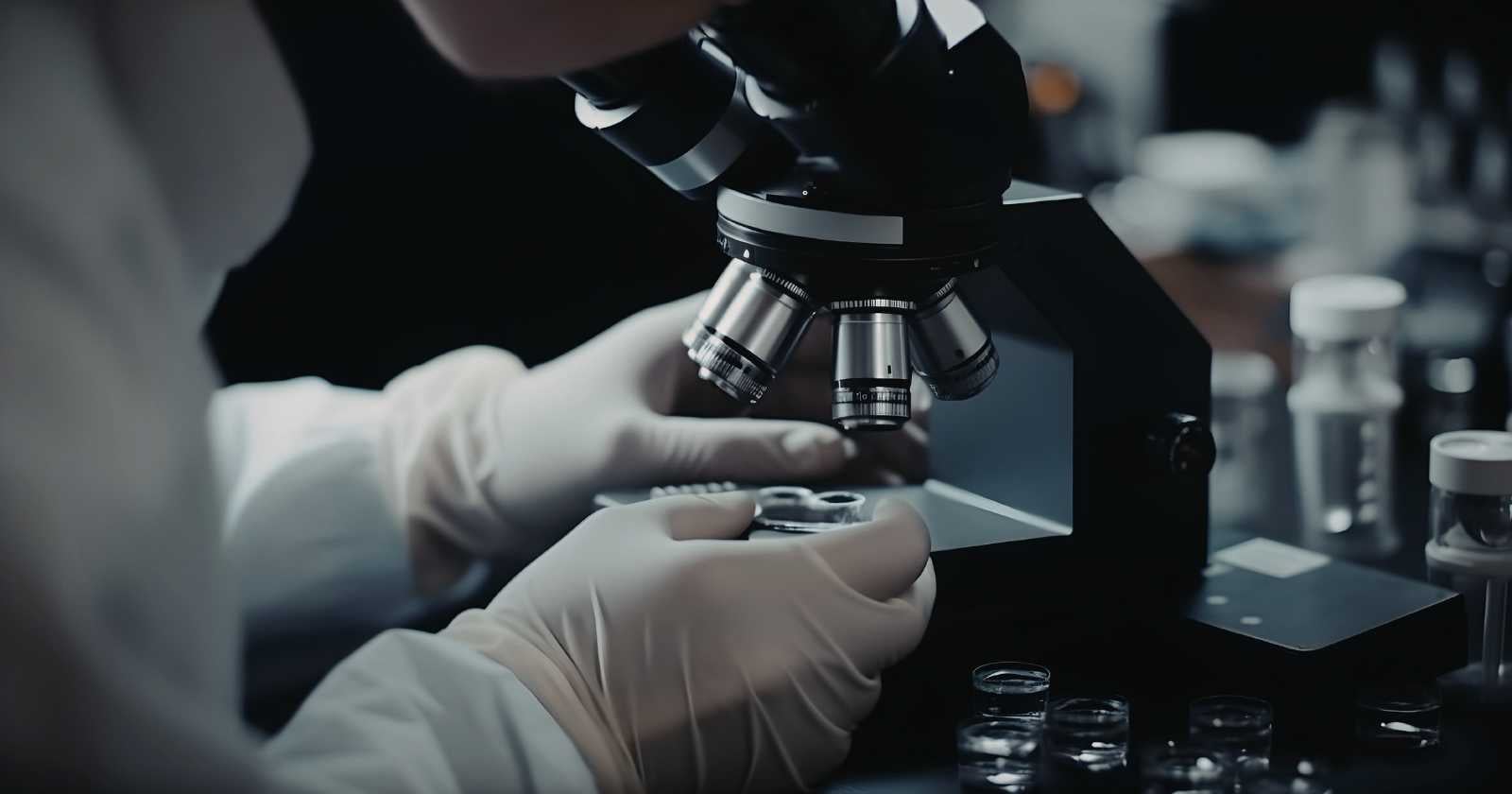
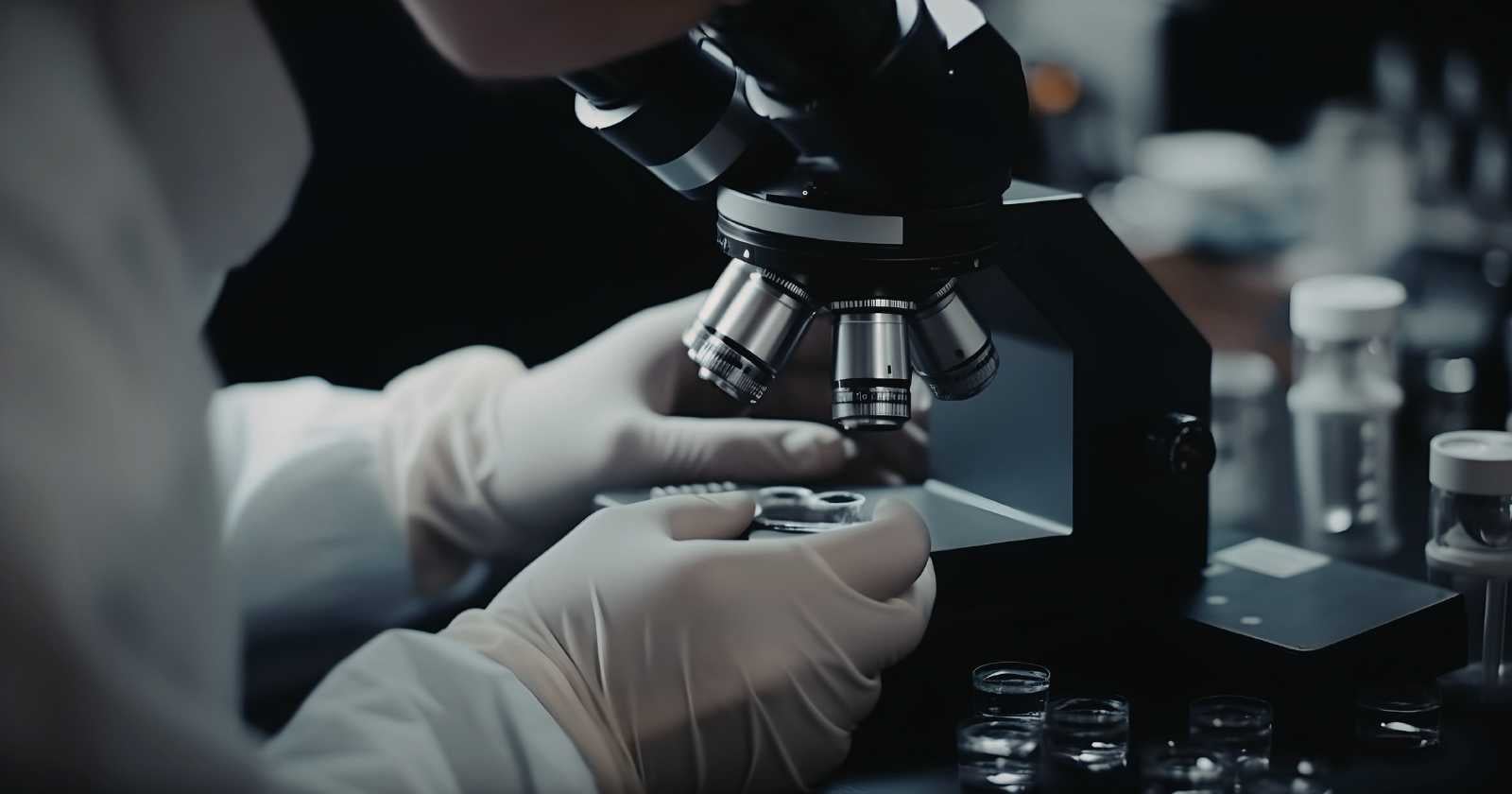
When Brown took a faculty position at the California Institute of Technology in 1952, Patterson came with him as a research fellow and started over. He built what was, at the time, the cleanest room on Earth. Filtered air. Acid-washed walls. Reagents he distilled himself, sometimes dozens of times, to strip out trace metals. Visitors had to change clothes. The lab at Caltech became a kind of monastery for one element.
By 1953, the room was finally clean enough. Patterson dissolved a sample of troilite — an iron-sulfide mineral — from the Canyon Diablo meteorite that struck Arizona about fifty thousand years ago, ran it through Mark Inghram’s mass spectrometer back at Chicago, and got a reading. The Earth, he calculated, was about 4.55 billion years old. The number has barely moved since.
And once the room was clean enough to read meteorites, it was also clean enough to read everything else. That is when Patterson started looking at the ocean. At Arctic ice. At the dust on rooftops. At the bones of ancient Peruvians compared to modern Americans.
The number that should not have existed
What he found, published through the late 1950s and 1960s, was that modern humans were carrying far more lead in their bodies than their pre-industrial ancestors. The “normal” baseline that medical textbooks used was not normal at all. It was a poisoned baseline, established by measuring people who lived in a world that had been quietly saturated with the metal since the early twentieth century.
The source was not mysterious. General Motors, Standard Oil and DuPont had begun adding tetraethyl lead to gasoline in 1923 to stop engine knock. By the 1960s almost every car in America ran on it, and the exhaust was dusting cities, suburbs, and remote glaciers alike. Greenland ice cores Patterson sampled showed lead concentrations climbing in lockstep with American car ownership.
A chemist against an industry
Patterson published his case in a 1965 paper called “Contaminated and Natural Lead Environments of Man.” He argued, with the calm of someone reading instrument data, that the average American was being chronically poisoned. The reaction from industry was not calm. Funding offers dried up. He was uninvited from a National Research Council panel on atmospheric lead. Industry-aligned toxicologists who had spent decades insisting the metal was safe at typical exposures became his public adversaries.
Patterson kept measuring. Tuna fish from cans versus tuna pulled from deep water. Skeletons from ancient Peruvian graves versus skeletons from modern Americans. The modern bones held far more lead. The pattern was the same everywhere he looked.
The science that finally broke industry resistance was not a single dramatic study. It was the slow piling-up of evidence that low-level lead exposure, the kind everyone was getting from gasoline exhaust, damaged children’s developing brains. A recent analysis of a century of hair samples by University of Utah researchers confirmed what Patterson had been arguing: airborne lead loads in American bodies tracked the rise and fall of leaded gasoline use with eerie precision, peaking at around 100 parts per million in hair midcentury and falling below one part per million by 2024.
The Environmental Protection Agency began phasing lead out of gasoline in the 1970s, partly to protect the newly mandated catalytic converters, which were destroyed by leaded fuel. Lead content in American gasoline fell from about 2.5 grams per gallon in 1971 to 0.1 grams per gallon by 1986, the level at which the metal had effectively vanished from mainstream consumer fuel. The final ban on leaded gasoline for on-road vehicles followed under the Clean Air Act Amendments of 1990 and took effect on January 1, 1996. Blood lead levels in American children fell roughly seventy percent over the following decades.
The fact that complicates the story
Lead’s relationship with the human brain is older and weirder than the gasoline fight suggests. Research published in Science Advances in October 2025 found that early hominids were exposed to natural lead from volcanic and geological sources for more than two million years, and that the pressure of dealing with that exposure may have shaped the evolution of human cognition. The international team analyzed fifty-one fossilized teeth from species including Australopithecus, Paranthropus, early Homo, Neanderthals, and Homo sapiens, finding chemical signatures of repeated childhood lead exposure in roughly seven of every ten samples. The metal that Patterson chased across the planet had been shadowing the species since before the species existed.
That ancient exposure was low and episodic. What General Motors did was different in scale by orders of magnitude. Patterson’s instruments could see the difference. The cars could not.
Why lead has not actually gone away
Leaded gasoline is still legal in one major American use: piston-engine aircraft. Small planes, the kind that fly out of municipal airports, still burn 100-octane low-lead avgas because the older engines they use need it to prevent detonation. The technical reasons are real, the regulatory exemptions are real, and the FAA has estimated that roughly 167,000 American aircraft still rely on the fuel. Communities living under approach paths to general aviation airports face ongoing exposure that the EPA has only recently moved to address.
The soil is also a long-term reservoir. Decades of car exhaust settled into the dirt along American roads, and the lead is still there. Urban gardeners growing vegetables in older neighborhoods are pulling food from soils that hold the chemical fingerprint of every car that drove past between the 1920s and the 1996 ban.
The man who would not stop washing beakers
Patterson kept his clean lab going until he retired. He died on December 5, 1995, at his home in Sea Ranch, California, at the age of seventy-three. The Caltech room he built to read meteorites is the reason every introductory geology textbook can confidently tell a student that the Earth is 4.55 billion years old. The fight he picked along the way is the reason children born after the phase-out had dramatically lower blood lead levels than those born before it.
He never set out to be a public health figure. He set out to date a rock. The lead got in his way, and instead of giving up, he followed it home. In a Caltech oral history recorded nine months before his death, he described the work the way someone might describe weeding a garden: methodically, without drama, one source of contamination at a time.
In the basement at Caltech, the mass spectrometer Patterson used to refine his age measurements made a sound somewhere between a hum and a hiss. The samples were tiny: micrograms of lead extracted from grams of meteorite, dissolved in acid he had distilled himself, dripped onto a filament, vaporized, sorted by mass, and counted one isotope at a time. The reading he got was the number the planet had been waiting to tell someone for four and a half billion years.
The reading he got from a modern American skull years later was the number an industry had been hoping nobody would bother to take. He took it anyway. He published it. And by the time the last leaded pump in America ran dry, the graduate student who had only wanted to weigh a meteorite had measured something much larger: how much of a century one element can quietly steal.
