

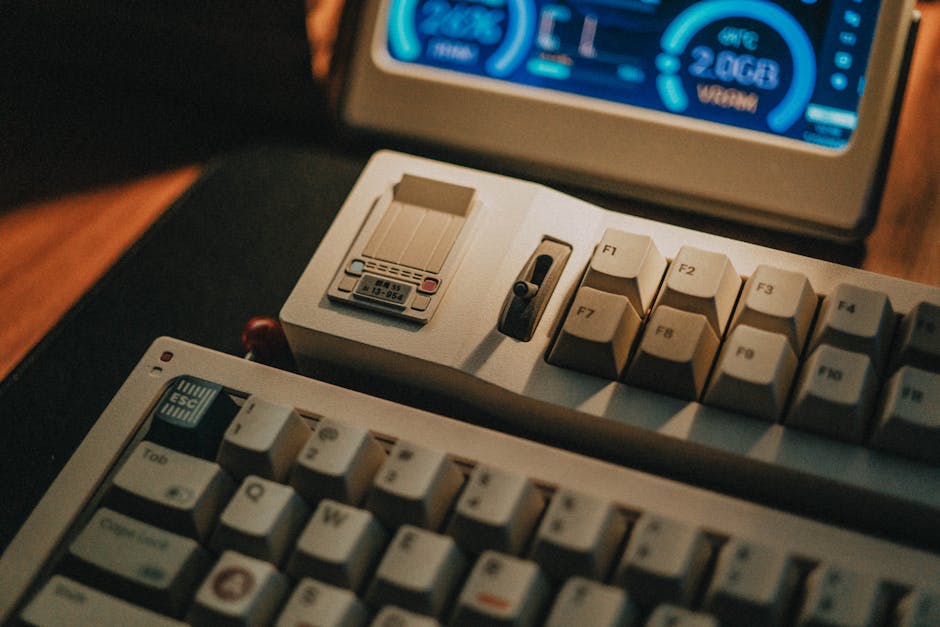
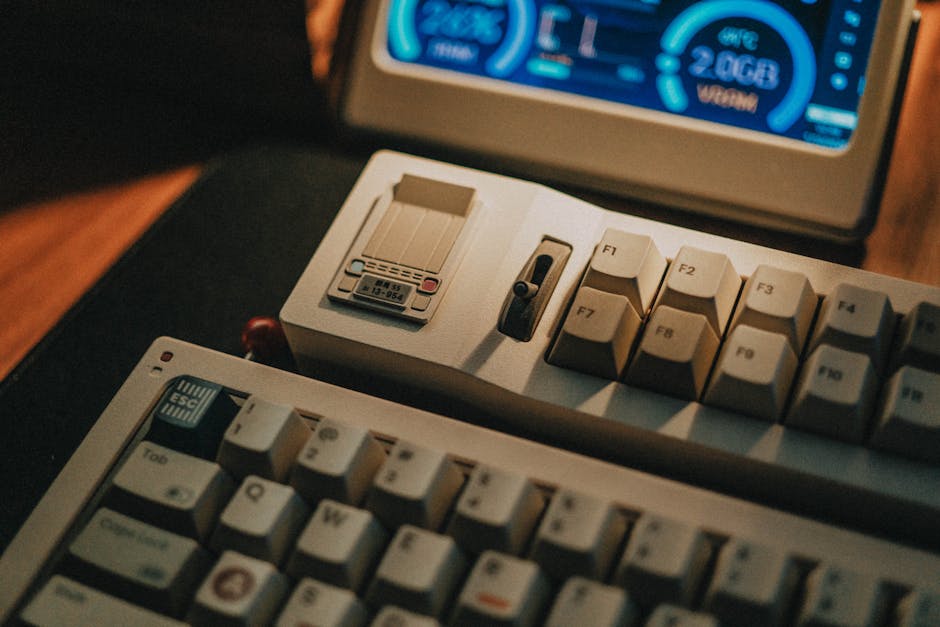
The original Macintosh keyboard was not missing arrow keys by accident.
When Apple put the Macintosh on sale on January 24, 1984, the machine arrived with a compact beige keyboard that had no cursor arrows, no function-key row, and no built-in numeric keypad. For a computer that was supposed to sell the public on a graphical interface and a mouse, that absence was part of the point.
Steve Jobs wanted the Macintosh to feel like a clean break from the command-heavy machines around it. In a 1985 Playboy interview about the Macintosh and the mouse, he argued that pointing was more natural than typing commands, and said Apple had tested mouse-based actions such as cutting and pasting against traditional approaches.
The stripped-down keyboard was the hardware version of that argument. If the user could not nudge the cursor with arrow keys, the user had to point. If developers could not assume function keys, they had to build software around menus, windows, and the mouse.
A keyboard designed around what it left out
The Macintosh team was not just building another personal computer. It was trying to make the graphical user interface feel unavoidable.
That is why the keyboard mattered so much. The original Macintosh Keyboard, model M0110, gave users letters, numbers, modifier keys, Return, Tab, Caps Lock, Option, and Command. What it did not give them was the familiar right-hand cluster that many typists expected.
The missing keys carried a message: this was not an Apple II, an IBM PC, or a terminal machine dressed in beige plastic. It was a mouse-first computer.
The Ridley Scott-directed “1984” Super Bowl commercial aired two days before the launch and never lingered on the keyboard. The ad sold liberation, not data entry. The keyboard followed the same logic by refusing to provide the old shortcuts back into keyboard-first computing.
Why the arrows mattered
The decision made sense from a software-design point of view. If arrow keys existed, developers could treat the Macintosh like a prettier version of the machines they already knew.
Applications ported from older systems could have kept the same cursor-key habits and avoided the deeper work of designing for a graphical interface. Without arrows, developers had to assume that a pointer on the screen was central to the experience.
That helped make early Mac software feel different. MacWrite, MacPaint, MacDraw, and early Microsoft Word for Mac all taught users to select, drag, click, and use menus. The mouse was not a novelty tacked onto the side. It was the central input device.
But design purity created practical friction. Writers wanted to move a cursor one character at a time. Spreadsheet users wanted to enter columns of numbers. Office buyers comparing the Mac with more conventional computers could immediately see what Apple had removed.
Apple’s own accessory complicated the purity
The original draft framed the missing keys mainly as a third-party aftermarket story. The more accurate version is stranger: Apple itself soon had to sell back some of the keys the main keyboard had left out.
The Macintosh Numeric Keypad included arrow keys as an optional external accessory for the early Macintosh. It connected through the same telephone-style keyboard cabling and sat beside the original keyboard as an admission that some users still needed the old controls.
That does not erase Jobs’s original design argument. It makes it sharper. The standard keyboard pushed people toward the mouse, while the optional keypad gave more traditional users a way to work without fighting the machine every few seconds.
The accessory also showed how quickly the market answered Apple’s minimalism. Whether through Apple’s own keypad or later keyboard products from Apple and other vendors, the missing keys became something users kept asking to get back.
Apple quietly moved back toward the wider keyboard
The Macintosh Plus arrived in January 1986 with a larger keyboard that included a numeric keypad and directional arrow keys. By then, Jobs was no longer running the Macintosh group day to day, and Apple was entering the post-Jobs Apple era that produced the Macintosh II, LaserWriter, and PowerBook line.
The wider Mac Plus keyboard was a practical correction. Apple had learned that mouse-first did not mean keyboard-never.
Then came the Apple Extended Keyboard in 1987, with a full function row, a dedicated arrow cluster, and a numeric keypad. It became one of the most respected keyboards Apple ever shipped, and it looked much more like the conventional desktop keyboards Jobs had tried to move beyond.
The experiment still worked
The important thing is that Jobs did not entirely lose the argument.
The keys came back, but they came back after the Mac interface had already taught users and developers a new hierarchy. The mouse stayed primary. Arrow keys became useful for small adjustments, not the main way to move through the machine.
That balance is still visible on modern Mac keyboards. The arrow keys are there, but they are tucked away in the lower-right corner. The trackpad or mouse remains the default way many users move around the screen.
The original Macintosh keyboard was a hard-edged design bet: remove familiar controls and force a new habit into existence. Apple later softened the bet because real users had real work to do. But the larger idea survived.
The missing arrow keys were not just a keyboard quirk. They were one of Apple’s earliest lessons in a pattern the company would repeat for decades: remove something familiar, wait for users to object, watch an accessory market form around the absence, and then decide whether the future had arrived or whether the missing piece needed to come back.
