


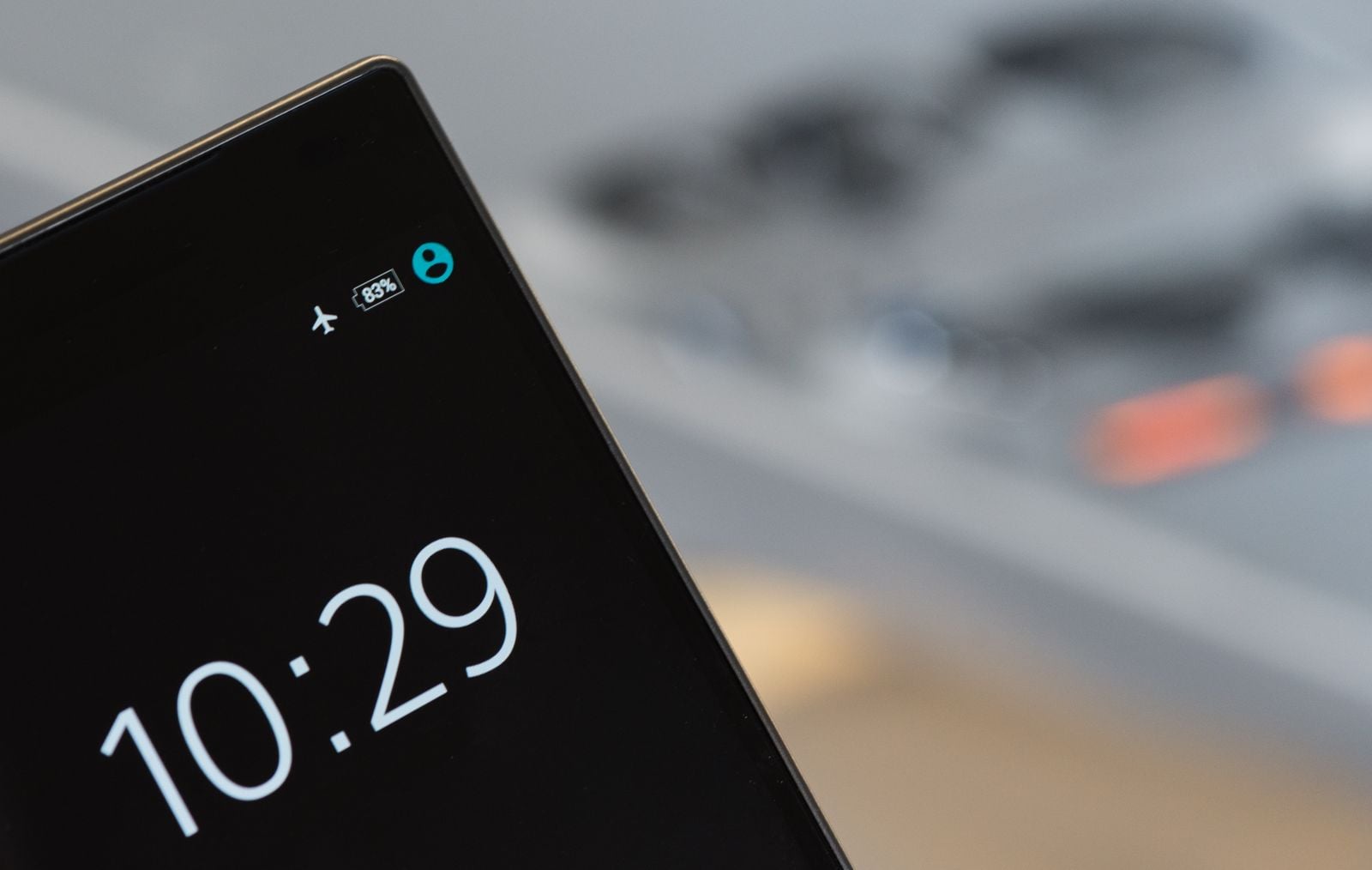
A phone can display 15 percent while its lithium-ion cell is already approaching the voltage at which the device must shut down. The percentage is not a direct reading from the battery chemistry; it is an estimate that can remain convincing until fresh evidence forces the system to correct it.
A small fuel-gauge circuit sits between the cell and the operating system. Devices such as Texas Instruments’ BQ27Z561 simultaneously measure current and voltage, monitor temperature, and calculate values such as remaining capacity and state of charge.
The calculation is not identical in every phone. Battery chemistry, gauge hardware, manufacturer configuration, operating-system software, temperature, age, and the phone’s recent workload all influence the number shown on the screen.
What the phone is measuring
Many fuel gauges begin by measuring the current flowing into or out of the cell. A tiny sense resistor produces a voltage proportional to that current, allowing the gauge to add up the electrical charge that has entered and left over time.
This is called coulomb counting. If a battery’s estimated full-charge capacity is 4,000 milliamp-hours and the gauge records that 1,000 milliamp-hours have been removed, a simple calculation places the battery near 75 percent.
The problem is that tiny measurement errors accumulate. As Analog Devices explains in its fuel-gauge overview, coulomb counting provides strong short-term accuracy but can develop drift, so practical gauges combine it with information from voltage and a model of the cell.
Voltage supplies a second clue. When the battery has rested, or when the algorithm estimates what its rested voltage would be, that open-circuit voltage can be compared with a characterised relationship between voltage and state of charge.
Temperature and impedance supply more context. The gauge therefore does not simply convert one voltage reading into one percentage; it continually reconciles several imperfect measurements with its stored description of how that particular type of battery should behave.
Why voltage is a difficult clue
A lithium-ion cell’s voltage declines as it discharges, but not in a straight line. Exact limits depend on the chemistry and design, with common cells using different maximum charge voltages and end-of-discharge thresholds, as shown in Battery University’s comparison of lithium-ion voltage ranges.
The relationship is also chemistry-specific and nonlinear. Laboratory work mapping the open-circuit-voltage and state-of-charge curve shows why battery models use a fitted relationship rather than assuming that each tenth of a volt represents a fixed block of capacity.
The voltage measured while a phone is working is not even the battery’s undisturbed voltage. Current flowing through the cell’s internal resistance causes the terminal voltage to sag, especially when the processor, camera, modem, or display suddenly demands more power.
Remove that load and the terminal voltage rebounds. A phone restarted after several quiet minutes may therefore see a healthier-looking voltage even though no charge has been added to the cell.
Temperature changes the picture again. A colder cell generally has higher impedance and less immediately available power, so the same workload can produce a deeper voltage sag than it would at room temperature.
How the estimate corrects itself
Modern algorithms maintain a model of the battery rather than relying on a single counter. Texas Instruments’ Impedance Track explanation describes the use of voltage correlation, coulomb counting, chemistry data, capacity estimates, and resistance updates to predict how much usable charge remains.
Other gauges use different implementations of the same broad idea. Analog Devices’ ModelGauge family, for example, blends the short-term behaviour of a coulomb counter with the longer-term stability of voltage-based estimation.
For much of a discharge, several possible estimates may look plausible. The displayed percentage can continue falling smoothly even while measurement drift, an imperfect battery model, or changing impedance has created a gap between the reported figure and the energy the phone can actually use.
Near the bottom, the evidence becomes harder to ignore. If the voltage falls sharply under an ordinary load and approaches the device’s shutdown threshold, the gauge may conclude that its earlier estimate was too optimistic.
That is how 15 percent can become 3 percent within a minute. The battery has not suddenly lost 12 percent of its chemical charge; the software has revised its estimate after observing conditions that no longer fit the previous number.
The reverse can occur after shutdown. Once the load disappears and the cell rests, its voltage rebounds, and a restarted phone may calculate that a small amount of usable capacity remains.
Why aging and cold expose errors
Lithium-ion batteries hold less charge as they chemically age, and their impedance tends to rise. Apple’s battery and performance documentation explains that an aged battery can lose both maximum capacity and the ability to supply the instantaneous peak power demanded by the phone.
Higher impedance makes voltage drop farther when current is drawn. If that drop crosses the minimum voltage required by the electronics, the phone can shut down even though the gauge had been reporting charge remaining.
Cold conditions can temporarily produce similar behaviour. Apple warns that using an iPhone outside its normal temperature range can shorten apparent battery life or cause the device to turn off, with normal behaviour returning after it warms.
The gauge’s capacity model can also require time to adjust. In one documented example, Apple’s iPhone 11 battery-health recalibration used measurements gathered during regular charging cycles and could take several weeks before publishing an updated estimate.
That does not mean every phone must routinely be charged to 100 percent and deliberately drained to zero. Relearning behaviour varies by gauge and firmware, and some algorithms update their capacity and resistance estimates from ordinary partial cycles, resting periods, and operating data.
Why the percentage looks steadier than the chemistry
A raw estimate could move up and down whenever the phone opens an app, changes temperature, or briefly rests. Fuel gauges therefore commonly apply filtering; Texas Instruments lists a state-of-charge smoothing filter among the features of one of its single-cell Impedance Track gauges.
The lock-screen number is designed to be useful, not to expose every uncertain calculation occurring underneath it. The system normally favours a gradual countdown and allows a conspicuous jump only when keeping the old number would be less credible than correcting it.
This kind of hidden estimation appears throughout everyday technology. The GPS satellites overhead account for relativistic timing effects, while the Voyager probes ration dwindling electrical power far beyond the planets; each system turns indirect measurements into a usable answer.
Inside a phone, that answer is compressed into two digits and a small battery icon. Most days the estimate drifts downward so smoothly that its uncertainty stays invisible, until the voltage sags, the model changes its mind, and 15 becomes 3 before the screen has had time to dim.
