
Close Menu
Financblog
    What's Hot

    When Grace Hopper wanted to explain a nanosecond to admirals who kept asking why satellites were slow, she handed each of them a piece of wire 11.8 inches long, the exact distance light travels in a billionth of a second, and told them to keep it in their pocket as a reminder that physics, not laziness, sets the limit.

    June 8, 2026

    BofA sees ‘red flags’ in the U.S. stock market. Here’s what to buy now.

    June 8, 2026

    Best High-Yield Savings Rates for June 8, 2026: Up to 5%

    June 8, 2026
    Facebook X (Twitter) Instagram
    Financblog
    Facebook X (Twitter) Instagram
    • Home
    • Personal Finance
    • Passive Income
    • Saving Tips
    • Banking
    • Loans
    Financblog
    Home»Saving Tips»When Grace Hopper wanted to explain a nanosecond to admirals who kept asking why satellites were slow, she handed each of them a piece of wire 11.8 inches long, the exact distance light travels in a billionth of a second, and told them to keep it in their pocket as a reminder that physics, not laziness, sets the limit.
    Saving Tips

    When Grace Hopper wanted to explain a nanosecond to admirals who kept asking why satellites were slow, she handed each of them a piece of wire 11.8 inches long, the exact distance light travels in a billionth of a second, and told them to keep it in their pocket as a reminder that physics, not laziness, sets the limit.

    administraciónBy administraciónJune 8, 2026No Comments5 Mins Read
    Facebook Twitter LinkedIn Telegram Pinterest Tumblr Reddit WhatsApp Email
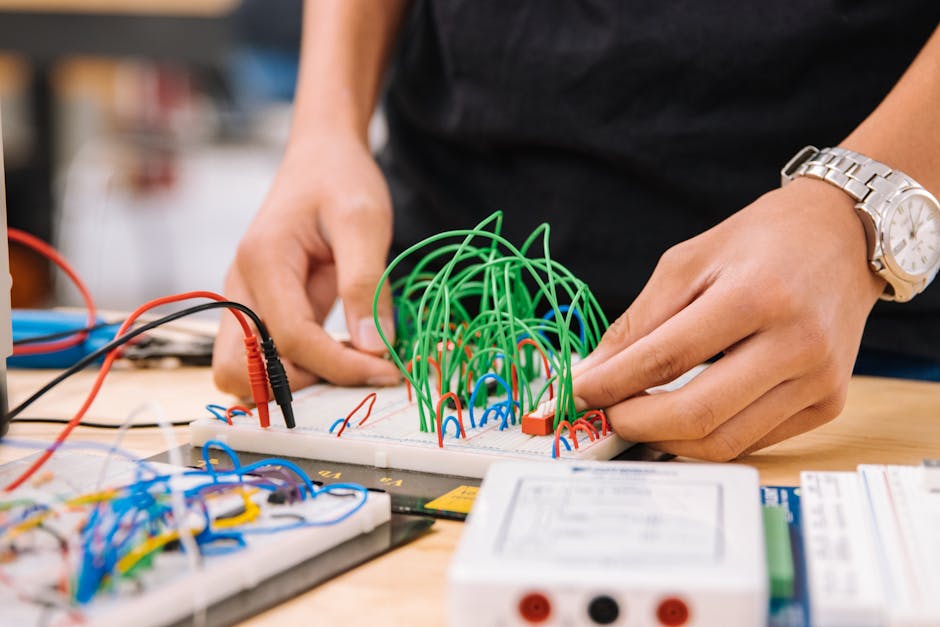
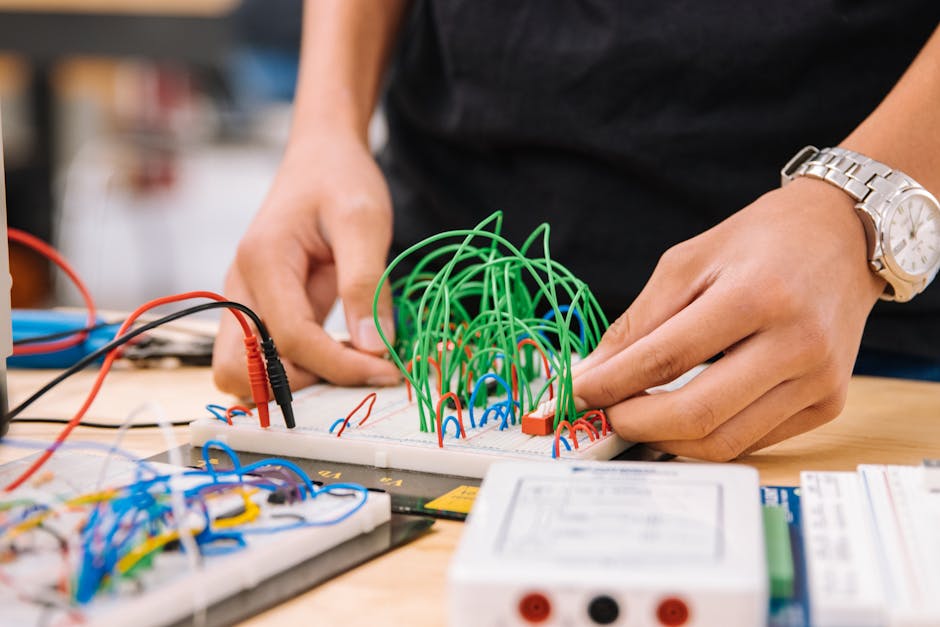
    Hands manipulating wires on breadboards for electronic prototyping.
    Share
    Facebook Twitter LinkedIn Pinterest Email

    Grace Hopper kept a bundle of wires, each one cut to exactly 11.8 inches. She handed them out at lectures, in Navy briefings, and to anyone who asked why the new satellite links felt sluggish. The wire, she explained, was a nanosecond. That was how far light could travel in one billionth of a second, and no amount of engineering or budget would ever shrink it.

    She called them her “nanoseconds.” By the end of her career she had given them out at hundreds of talks across the country.

    The bit became one of the most famous demonstrations in computing history, partly because it was funny and partly because it was true. Hopper, then a rear admiral in the U.S. Navy, was trying to explain something that the men signing her budget requests kept refusing to accept: the reason a signal bounced off a satellite took noticeable time to come back was not that the engineers were slow. It was that the universe was.

    The wire trick

    Hopper had been doing the nanosecond demonstration since the late 1960s, refining it through her lectures and on the corporate circuit. According to the Smithsonian’s National Museum of American History, which holds a bundle of about one hundred of her original wires, she began distributing them to demonstrate how designing smaller components would produce faster computers. The math is unforgiving and elegant. Light moves at roughly 299,792,458 meters per second in a vacuum. Divide that by a billion and you get about 29.98 centimeters, or 11.8 inches. A foot of wire, near enough, is a nanosecond’s worth of distance.

    She would hold up the wire and say, in that dry New York cadence, that this was the maximum, the absolute ceiling, the figure no programmer could argue with. In a 1985 lecture at MIT Lincoln Laboratory, she was careful to note that signals in a copper wire actually move slower than that. But the wire was the prop, and the prop made the point land.

    Then she would pull out a longer coil — 984 feet of it — and call it a microsecond, the distance light covers in one millionth of a second. The round trip between a ground station and a geostationary satellite, she explained, runs close to a quarter of a second. That is the delay, she would say, and there is nothing you or I can do about it.

    Why admirals needed a piece of string

    The audience mattered. Hopper was not lecturing physicists. She was talking to senior officers who controlled procurement, who had grown up with telephones that connected instantly across a city and now wanted to know why the fancy new computer networks could not do the same thing across an ocean. The complaint was usually framed as a failure of engineering. Surely if the contractors tried harder, the delay would shrink.

    Hopper handed them the wire. The wire did not care about budgets.

    The demonstration worked because it converted an abstract physical constant into something you could pick up and turn over in your hand. Holding the nanosecond made it real in a way that hearing the number never did.

    That was the whole trick. Hopper had spent twelve years teaching mathematics at Vassar before the war, and her instincts about how to teach something hard had been refined over a decade of undergraduates who had not chosen to be there. She knew that the abstract becomes concrete the moment it fits in your palm.

    The fact behind the joke

    The deeper claim Hopper was making is one that still trips people up. The speed of light is not a fact about light. It is a fact about causality itself, the maximum rate at which any information, any influence, any signal of any kind can travel from one place to another. It does not matter how clever the encoding scheme is. It does not matter how powerful the transmitter is. The wire is 11.8 inches and it always will be.

    This is why a video call to someone on the other side of the planet has a noticeable lag even on a perfect fiber connection. Light through optical fiber moves at roughly two-thirds of its vacuum speed, so intercontinental round trips take time just in physics, before any router or switch touches the packet.

    It is why high-frequency trading firms have spent considerable resources laying cables along the straightest possible routes between major financial centers, then switching to microwave towers that send signals through air instead of glass, because air is faster than fiber. The savings are measured in microseconds.

    Measuring the unmeasurable

    What Hopper did not tell her admirals, probably because it would have made them throw the wire at her, is that physicists have never actually measured the one-way speed of light. Every measurement ever performed has been a round trip, a pulse sent out and a reflection received, timed by a single clock. To measure the one-way speed you would need two synchronized clocks at either end, and synchronizing two clocks requires sending a signal between them, which requires knowing the speed of that signal, which is the thing you are trying to measure. The problem is circular, and there is no clean way out of it.

    Produced with AI assistance. Reviewed by the Make Tech Easier editorial team before publication. See our editorial policy and about page.

    About this article

    This article is for general information and reflection. It is not professional advice. For your specific situation, consult a qualified professional. Editorial policy →

    admirals billionth distance exact Explain Grace handed Hopper inches laziness light limit long nanosecond physics piece Pocket reminder satellites sets Slow told travels wanted wire
    Share. Facebook Twitter Pinterest LinkedIn Tumblr Telegram Email
    Previous ArticleBofA sees ‘red flags’ in the U.S. stock market. Here’s what to buy now.
    administración
    • Website

    Related Posts

    In 1965, Mary Allen Wilkes wrote LAP6 for the LINC computer from her parents’ Baltimore home, testing an interactive operating system on a 250-pound machine in the living room and becoming the first known person to use a personal computer at home, twelve years before the Apple II reached buyers

    June 8, 2026

    Apple’s original 1984 Macintosh keyboard had no arrow keys, no function keys, and no numeric pad because Steve Jobs wanted users to reach for the mouse first. Then Apple quietly sold the missing keys as an accessory.

    June 8, 2026

    In 1965, Joe Sutter’s Boeing team began shaping the 747 around a future they thought would belong to supersonic jets, lifting the cockpit onto a hump so the nose could open for cargo once the giant subsonic passenger plane had outlived its brief moment

    June 8, 2026
    Add A Comment
    Leave A Reply Cancel Reply

    Top Posts

    When Grace Hopper wanted to explain a nanosecond to admirals who kept asking why satellites were slow, she handed each of them a piece of wire 11.8 inches long, the exact distance light travels in a billionth of a second, and told them to keep it in their pocket as a reminder that physics, not laziness, sets the limit.

    June 8, 2026

    BofA sees ‘red flags’ in the U.S. stock market. Here’s what to buy now.

    June 8, 2026

    Best High-Yield Savings Rates for June 8, 2026: Up to 5%

    June 8, 2026

    Subscribe to Updates

    Get the latest sports news from SportsSite about soccer, football and tennis.

    About Us

    Welcome to FinancBlog, your trusted online resource for personal finance insights, money management tips, and financial education designed to help you make smarter financial decisions.
    At FinancBlog, our mission is simple: to make personal finance easy, understandable, and accessible for everyone. Whether you are looking to save more money, understand banking products, explore loans, or build passive income streams, we provide well-researched and easy-to-read information to guide you.

    Facebook X (Twitter) Instagram Pinterest YouTube
    a1
    Top Insights

    When Grace Hopper wanted to explain a nanosecond to admirals who kept asking why satellites were slow, she handed each of them a piece of wire 11.8 inches long, the exact distance light travels in a billionth of a second, and told them to keep it in their pocket as a reminder that physics, not laziness, sets the limit.

    June 8, 2026

    BofA sees ‘red flags’ in the U.S. stock market. Here’s what to buy now.

    June 8, 2026

    Best High-Yield Savings Rates for June 8, 2026: Up to 5%

    June 8, 2026
    Get Informed

    Subscribe to Updates

    Get the latest creative news from FooBar about art, design and business.

    © 2026 inancblog.com. All rights reserved. Designed by DD.

    • About Us
    • Contact Us
    • Terms & Conditions
    • Privacy Policy
    • Disclaimer

    Type above and press Enter to search. Press Esc to cancel.

    Ad Blocker Enabled!
    Ad Blocker Enabled!
    Our website is made possible by displaying online advertisements to our visitors. Please support us by disabling your Ad Blocker.