
Close Menu
Financblog
    What's Hot

    In October 2002, a Russian scientist named Dimitri Malashenkov stood up at a space conference in Houston and quietly explained that the dog Laika, whom the Soviet Union had publicly mourned as a heroic week-long orbiter in 1957, had actually died of heat and panic within about five hours of launch.

    June 5, 2026

    This investing strategy digs deeper to find hidden stocks riding the AI wave

    June 4, 2026

    When survivors near Lake Nyos woke on the morning of 22 August 1986, the cattle were dead in the fields, the birds had fallen out of the trees, and 1,746 of their neighbours were lying where they had stood the night before, with no fire, no flood, and no wound to explain it.

    June 4, 2026
    Facebook X (Twitter) Instagram
    Financblog
    Facebook X (Twitter) Instagram
    • Home
    • Personal Finance
    • Passive Income
    • Saving Tips
    • Banking
    • Loans
    Financblog
    Home»Saving Tips»When a massive solar storm hit Earth in 1972, it triggered a series of magnetic fluctuations so severe that it accidentally detonated dozens of U.S. Navy sea mines off the coast of North Vietnam, a military mystery that was only classified and explained decades later
    Saving Tips

    When a massive solar storm hit Earth in 1972, it triggered a series of magnetic fluctuations so severe that it accidentally detonated dozens of U.S. Navy sea mines off the coast of North Vietnam, a military mystery that was only classified and explained decades later

    administraciónBy administraciónMay 27, 2026No Comments6 Mins Read
    Facebook Twitter LinkedIn Telegram Pinterest Tumblr Reddit WhatsApp Email
    When a massive solar storm hit Earth in 1972, it triggered a series of magnetic fluctuations so severe that it accidentally detonated dozens of U.S. Navy sea mines off the coast of North Vietnam, a military mystery that was only classified and explained decades later
    Share
    Facebook Twitter LinkedIn Pinterest Email

    On August 4, 1972, U.S. military pilots flying south of Haiphong harbour in North Vietnam saw something they could not explain.

    The sea below them, by every account, was empty. No ships. No vessels of any kind moving through the water. And yet, as they watched, the ocean began to erupt. One after another, in quick succession, dozens of sea mines detonated — more than two dozen of them — exploding in open water with nothing there to set them off.

    It looked like an attack with no attacker. A minefield going off against an enemy that wasn’t there.

    The explanation, when it came, had nothing to do with the war at all. It had come from 93 million miles away.

    The mines and how they worked

    The mines had been placed there by the U.S. Navy just three months earlier, as part of an operation called Pocket Money — a campaign to choke off North Vietnam’s seaborne supply lines by sealing its harbours with explosives.

    These were not contact mines, the kind that detonate when a ship physically bumps into them. They were magnetic-influence mines. Each one carried a sensor designed to detect a very specific thing: a disturbance in the local magnetic field, of the kind produced when the huge steel hull of a ship passes nearby. A ship moving overhead would warp the magnetic field around the mine, the sensor would register the change, and the mine would fire.

    It was an elegant design. It meant the mine didn’t need to be touched to be lethal. It just needed to sense the magnetic shadow of a passing ship.

    But a magnetic sensor has no way of knowing what disturbed the magnetic field. It only knows that the field changed. And on August 4, 1972, something disturbed the magnetic field off the coast of North Vietnam on a scale no ship could ever produce.

    What hit the Earth

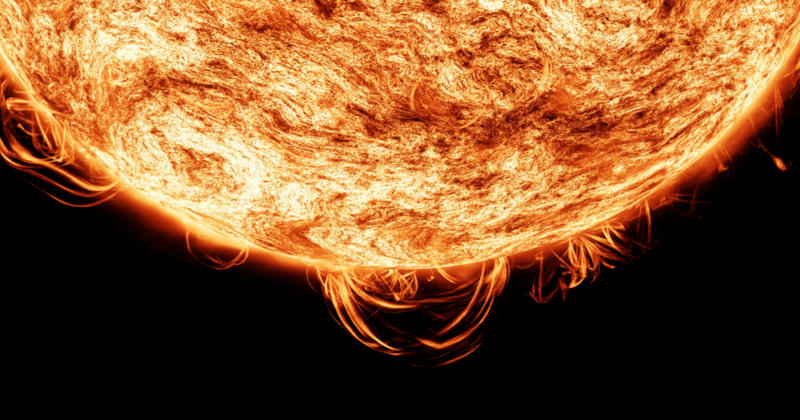
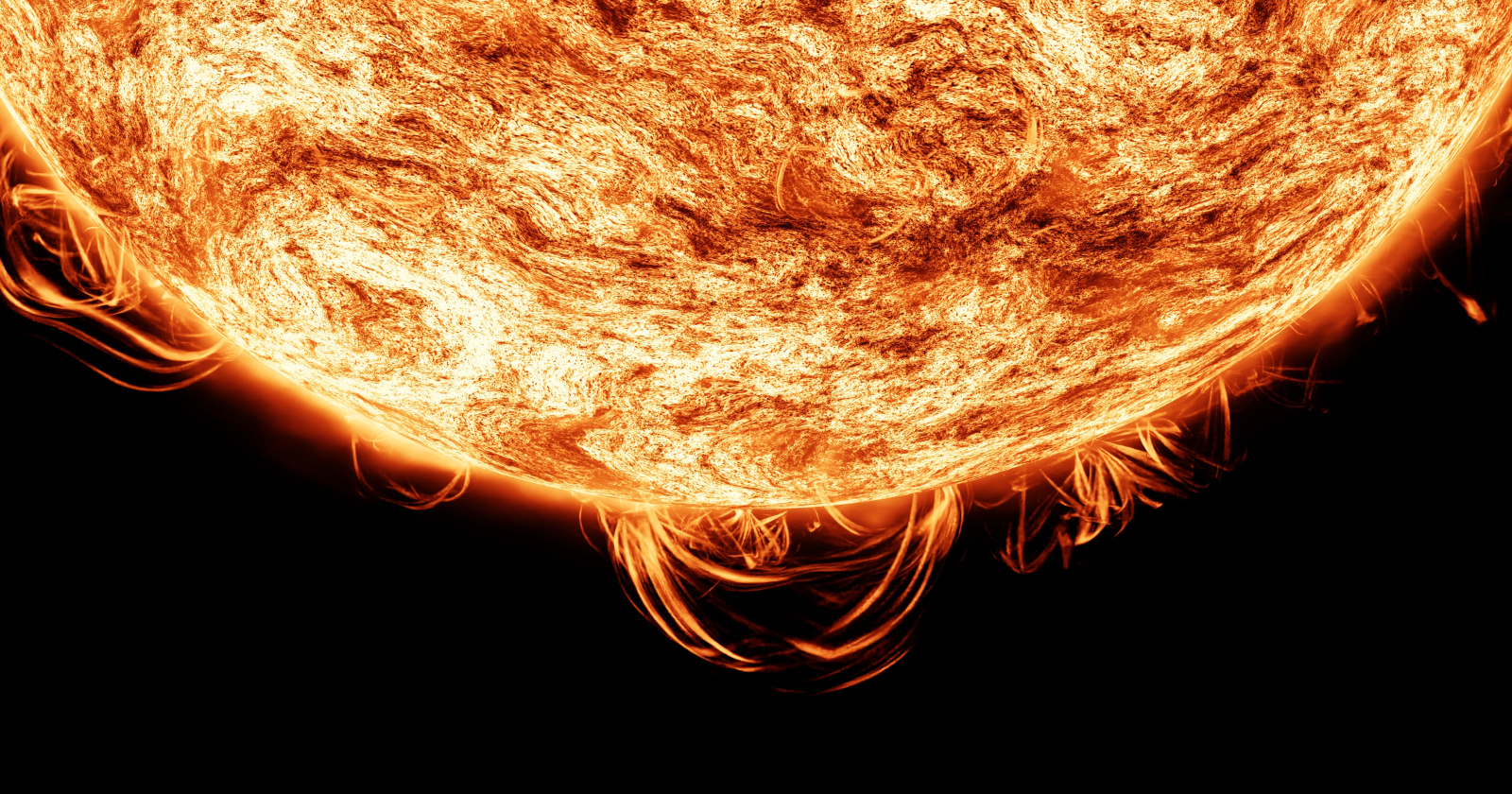
    In early August 1972, the Sun erupted.

    A sunspot region produced a series of intense solar flares, flinging enormous bursts of magnetised gas — coronal mass ejections — directly toward Earth. One of these blasts crossed the 93 million miles from the Sun to our planet in just 14.6 hours, the fastest such transit ever recorded. For comparison, that journey usually takes two or three days.

    When that storm slammed into Earth’s magnetosphere, it caused havoc. Across North America, electrical grids and telephone systems were disrupted. Auroras — normally confined to the far north — were seen far closer to the equator than usual. It was, by modern reckoning, a Carrington-class event: one of the most powerful solar storms in recorded history.

    And it did something to Earth’s magnetic field. A storm of that magnitude doesn’t just light up the sky — it sends powerful fluctuations rippling through the planet’s magnetic environment, sudden spikes and surges in field strength detectable all over the world.

    Off the coast of North Vietnam, dozens of magnetic-influence mines were sitting in the water, each one armed with a sensor watching for exactly that — a sudden change in the magnetic field.

    The sensors did their job perfectly. They detected a magnetic disturbance and they fired. They simply had no way of knowing that the disturbance hadn’t come from a ship. It had come from the Sun.

    What the Navy knew, and when

    Here is the part of the story that the popular version often gets slightly wrong.

    It’s tempting to imagine the exploding mines as a mystery that sat unsolved for decades — a wartime puzzle no one could crack until modern science finally explained it. That isn’t quite what happened.

    The Navy investigated the detonations almost immediately, and figured out the likely cause fairly quickly. By the early 1970s it was already well understood that solar activity could disturb Earth’s magnetic field. Navy officials consulted experts at the Space Environment Laboratory, part of what is now NOAA, and concluded with what they described as a “high degree of probability” that the mines had been set off by the solar storm.

    So the Navy explained the event — to itself. The problem is that the explanation then went quiet. The relevant documents were filed away in the Vietnam War archives, classified, and the story never reached the wider scientific community that studies space weather. For decades, the people who would have found the incident most significant — solar physicists, space-weather researchers — simply didn’t know it had happened.

    That changed in 2018, when a team led by Delores Knipp, a space scientist at the University of Colorado Boulder, dug into the old, declassified records and published their findings in the journal Space Weather. Knipp has said the research was inspired by “a fragment of a memory” — a half-remembered story that turned out to be real. Her team confirmed the original Navy assessment and brought the whole episode, finally, into public scientific view.

    Why a 50-year-old explosion still matters

    It would be easy to file this under wartime curiosity. It is something more useful than that.

    The exploding mines are one of the clearest demonstrations on record of a solar storm reaching out of the sky and physically triggering technology on the ground — or, in this case, under the sea. The Sun did not just disrupt a radio signal or flicker a power grid. It detonated weapons.

    That matters because the world today is vastly more dependent on magnetically sensitive technology than it was in 1972. Power grids, satellites, GPS, communication networks, aviation — all of it is vulnerable, to varying degrees, to exactly the kind of event that set off those mines. A Carrington-class storm striking the modern world would do far more than disturb a minefield.

    The 1972 storm is studied now precisely because it shows what these events can actually do — not in theory, but in fact. The Sun reached down, half a century ago, and set off dozens of explosions in a harbour on the other side of a war.

    It was an accident of timing, a coincidence of solar physics and military hardware. But it was also a warning. The Sun had demonstrated, plainly, that it can touch the things we build.

    We are only now, decades later, beginning to take that lesson as seriously as it deserves.

    Produced with AI assistance. Reviewed by the Make Tech Easier editorial team before publication. See our editorial policy and about page.

    About this article

    This article is for general information and reflection. It is not professional advice. For your specific situation, consult a qualified professional. Editorial policy →

    Accidentally classified Coast decades detonated dozens Earth Explained fluctuations hit magnetic Massive military mines mystery Navy North Sea series severe SOLAR Storm triggered U.S Vietnam
    Share. Facebook Twitter Pinterest LinkedIn Tumblr Telegram Email
    Previous ArticleKathleen Kennedy Townsend quickly finds a buyer for charming $1.6 million Cape Cod home
    Next Article Why Every Rich Person I Know Still Has Life Insurance
    administración
    • Website

    Related Posts

    In October 2002, a Russian scientist named Dimitri Malashenkov stood up at a space conference in Houston and quietly explained that the dog Laika, whom the Soviet Union had publicly mourned as a heroic week-long orbiter in 1957, had actually died of heat and panic within about five hours of launch.

    June 5, 2026

    When survivors near Lake Nyos woke on the morning of 22 August 1986, the cattle were dead in the fields, the birds had fallen out of the trees, and 1,746 of their neighbours were lying where they had stood the night before, with no fire, no flood, and no wound to explain it.

    June 4, 2026

    When Soviet pilot Viktor Belenko landed a top-secret MiG-25 at a Japanese airport in September 1976, American engineers tearing it down expected to find titanium and microchips, and instead they found vacuum tubes, rivets popped by hand, and a stainless steel airframe so heavy it could only fly fast in a straight line.

    June 4, 2026
    Add A Comment
    Leave A Reply Cancel Reply

    Top Posts

    In October 2002, a Russian scientist named Dimitri Malashenkov stood up at a space conference in Houston and quietly explained that the dog Laika, whom the Soviet Union had publicly mourned as a heroic week-long orbiter in 1957, had actually died of heat and panic within about five hours of launch.

    June 5, 2026

    This investing strategy digs deeper to find hidden stocks riding the AI wave

    June 4, 2026

    When survivors near Lake Nyos woke on the morning of 22 August 1986, the cattle were dead in the fields, the birds had fallen out of the trees, and 1,746 of their neighbours were lying where they had stood the night before, with no fire, no flood, and no wound to explain it.

    June 4, 2026

    Subscribe to Updates

    Get the latest sports news from SportsSite about soccer, football and tennis.

    About Us

    Welcome to FinancBlog, your trusted online resource for personal finance insights, money management tips, and financial education designed to help you make smarter financial decisions.
    At FinancBlog, our mission is simple: to make personal finance easy, understandable, and accessible for everyone. Whether you are looking to save more money, understand banking products, explore loans, or build passive income streams, we provide well-researched and easy-to-read information to guide you.

    Facebook X (Twitter) Instagram Pinterest YouTube
    a1
    Top Insights

    In October 2002, a Russian scientist named Dimitri Malashenkov stood up at a space conference in Houston and quietly explained that the dog Laika, whom the Soviet Union had publicly mourned as a heroic week-long orbiter in 1957, had actually died of heat and panic within about five hours of launch.

    June 5, 2026

    This investing strategy digs deeper to find hidden stocks riding the AI wave

    June 4, 2026

    When survivors near Lake Nyos woke on the morning of 22 August 1986, the cattle were dead in the fields, the birds had fallen out of the trees, and 1,746 of their neighbours were lying where they had stood the night before, with no fire, no flood, and no wound to explain it.

    June 4, 2026
    Get Informed

    Subscribe to Updates

    Get the latest creative news from FooBar about art, design and business.

    © 2026 inancblog.com. All rights reserved. Designed by DD.

    • About Us
    • Contact Us
    • Terms & Conditions
    • Privacy Policy
    • Disclaimer

    Type above and press Enter to search. Press Esc to cancel.

    Ad Blocker Enabled!
    Ad Blocker Enabled!
    Our website is made possible by displaying online advertisements to our visitors. Please support us by disabling your Ad Blocker.