

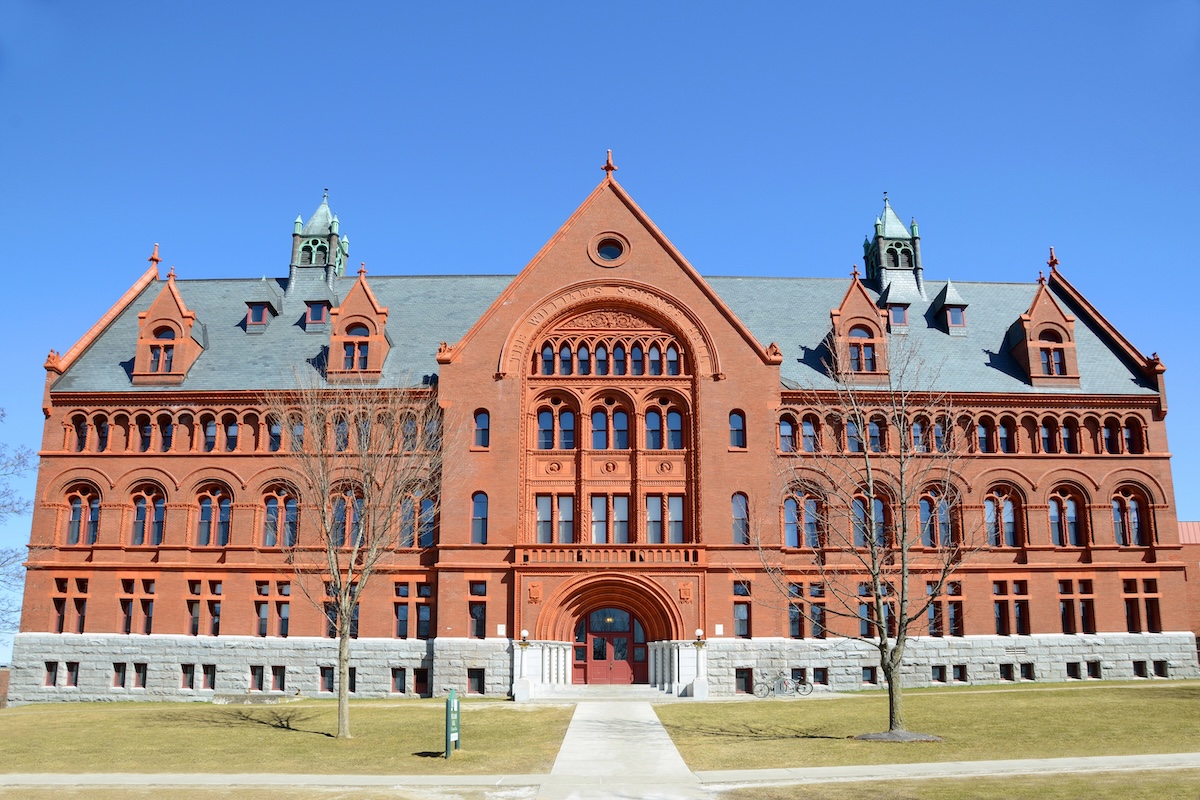

The University of Vermont announced on September 9 a Regional Tuition Break that drops annual tuition to $30,240 for incoming undergraduates who are permanent residents of Connecticut, Maine, Massachusetts, New Hampshire, or Rhode Island. UVM values the cut at more than $18,000 a year, or better than 35% off what non-residents normally pay at the school.
The new rate starts with the fall 2027 entering class and applies to first-time first-year students and transfers. It covers 31 majors (close to a third of UVM’s undergraduate catalog) spread across the College of Agriculture and Life Sciences, the College of Education and Social Services, and the Rubenstein School of Environment and Natural Resources.
Students must declare a primary major inside one of those three colleges and stay in it to hold the discounted rate, a condition that makes this less portable than the reciprocity agreements many families may be exploring.
Why It Matters
UVM is doing this through the New England Board of Higher Education, which already runs a regional Tuition Break across 66 public campuses and roughly 3,000 approved programs. Most participating schools only extend it to degrees a student’s home state does not offer, and the average benefit came to about $8,500 for 2024-25.
UVM is more than doubling that figure and dropping the home-state test for three entire colleges, which is a better proposition than the one out-of-state applicants usually face.
The math also arrives at a moment when families have less borrowing room to cover a gap. UVM’s published out-of-state tuition is $46,655 for 2026-27, with a full sticker cost of attendance of $68,878 once the $3,058 student fee, $14,654 in room and board, and indirect costs are added.
Federal parent borrowing is now capped at $20,000 a year and $65,000 per child after the July 1, 2026 loan changes, so a $68,878 price tag can no longer be covered with Parent PLUS. Cutting $16,000 or more off tuition brings UVM closer to what families may be able to afford after other aid.
The Details
- Who qualifies: permanent residents of Connecticut, Maine, Massachusetts, New Hampshire, and Rhode Island. Vermonters are not part of this program as they already pay the in-state tuition rate of $16,938.
- The price: $30,240 in tuition, which pencils out to about 179% of UVM’s in-state rate and sits right at the ceiling NEBHE typically allows.
- The reality check: measured against the current $46,655 out-of-state rate, the reduction is closer to $16,400. UVM’s “$18,000” framing implies it is benchmarking against a higher projected 2027-28 tuition figure that has not been published yet.
- Not discounted: fees, housing, and dining. All-in cost still lands somewhere near $52,000 a year before aid.
- Existing students: current NEBHE Tuition Break recipients at UVM keep their benefit as long as they remain eligible.
The Four-Year Math Still Doesn’t Shake Out Well
A discounted $30,240 is a better number than $46,655, but it is still a lot of money. UVM raised in-state tuition 2% and out-of-state tuition 4.5% for the current year, and the regional rate is pegged to the in-state figure, so the discounted price climbs with every increase a student sits through.
If annual hikes continue to be 2%, four years of tuition alone runs about $124,600. At 4% it’s roughly $128,400. Add the student fee, housing, and dining, and the four-year all-in number lands north of $217,000. That’s a huge red flag for us here at The College Investor. Remember, you don’t get paid more in the workplace because you spent an outrageous amount on college.
Our own college ROI estimates puts the net present financial value of a bachelor’s degree in the range of $40,000 to $80,000 depending on major and gender. That’s very close to what four years of UVM tuition costs in-state (without room and board), but falls apart for out-of-state students. Remember, room and board is typically what is destroying the value proposition of a bachelor’s degree.
How This Connects
Targeted regional discounting is what tuition strategy looks like when the applicant pool stops growing. Private colleges now discount 56% of gross tuition revenue on average, and publics in shrinking regions are running the same play under a different name.
New England faces among the steepest projected declines in high school graduates nationally, and campuses that miss their numbers pay for it — nine colleges are closing in 2026 alone. UVM enrolled 269 Maine students last spring, according to the Sun Journal, and the majors on this list are where it has open seats right now.
What’s Next
Watch for UVM to publish the full list of 31 qualifying majors and the fall 2027 application deadlines, since eligibility hinges on the declared major rather than the admission decision.
The second signal is whether other New England flagships answer with flexible-policy expansions of their own, since roughly half of NEBHE participants already use one and matching UVM is the cheapest response available to them.
Families weighing an offer should compare the discounted rate against what they would actually pay after aid at home. And always, please remember that cost is NOT worth it at every price point – especially if you’re borrowing student loans.

Robert Farrington is the founder of The College Investor and is widely recognized as one of the nation’s leading voices on student loan debt and saving for college. He holds an MBA from UC San Diego Rady School of Management and has spent over 15 years researching, writing, and advising on student loans, 529 plans, financial aid programs, and saving and investing for young professionals.
Robert has been featured in the The New York Times, The Wall Street Journal, The Washington Post, NBC News, and Forbes, where he has been a regular personal finance contributor for over a decade. His work combines both professional expertise and personal experience – he successfully navigated his own student loan repayment journey and has helped thousands of readers do the same.
He is committed to making the intersection of personal finance and education transparent and accessible. You can learn more about Robert on the About Page or on his personal site RobertFarrington.com.
