

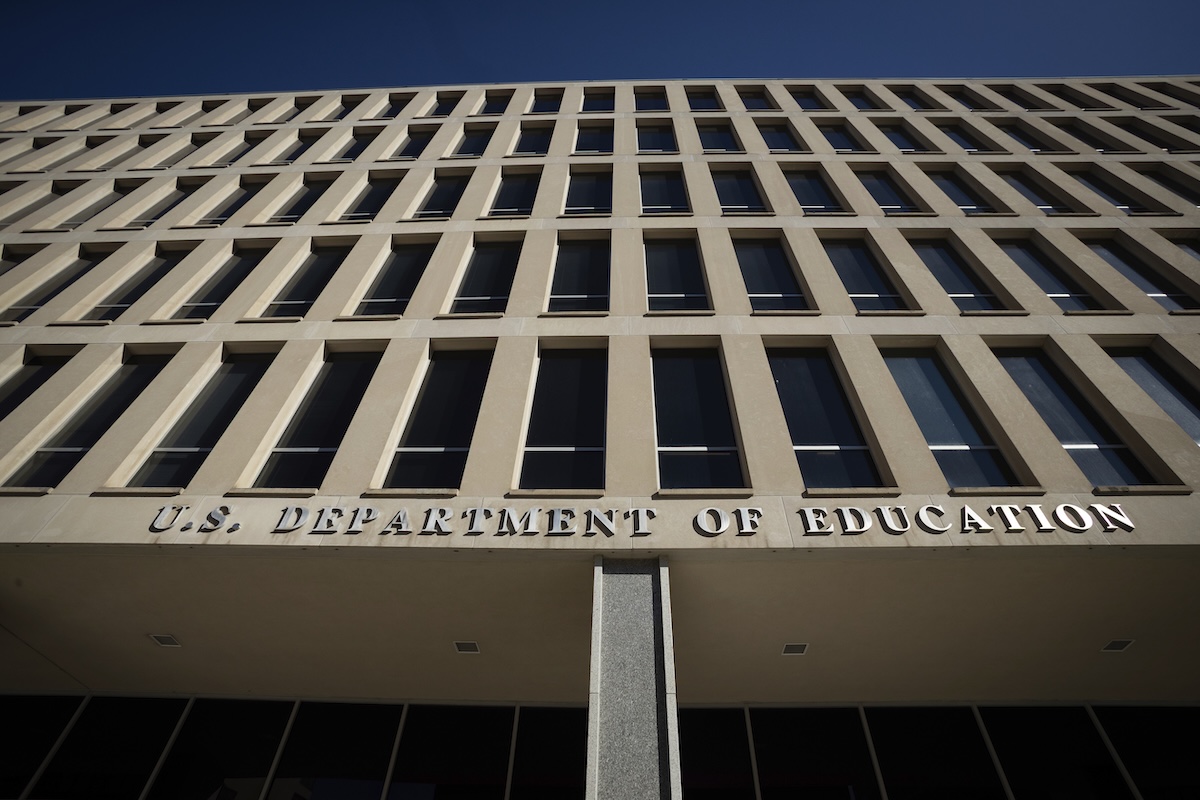
This week was a study in contradictions out of Washington. The Department of Education quietly hired hundreds of new staff at Federal Student Aid even as the administration continues to publicly dismantle the agency. Twenty-five states sued ED over the new graduate loan caps just six weeks before they take effect. The Workforce Pell rule was finalized. And the Class of 2026 quietly set an all-time FAFSA completion record while no one was watching.
Here’s a quick look at the most important stories shaping higher education and student finances this week for May 22, 2026.
🎓 Headlines at a Glance
- The Department of Education is hiring hundreds of new Federal Student Aid staff while continuing to publicly dismantle the agency.
- 25 states sue ED to block the new $100,000 graduate student loan caps.
- ED finalizes Workforce Pell, expanding Pell Grants to 8-week training programs.
- The Class of 2026 sets an all-time FAFSA completion record.
- Florida and Illinois bring the total to 18 states with Ed-Flex authority.

Would you like to save this?
1. The Education Department Is Hiring Hundreds — While Continuing To Dismantle Itself
NPR’s Cory Turner reported Thursday that the Office of Federal Student Aid (FSA) is in the middle of a hiring spree, adding around 380 new workers after losing roughly half its staff in last year’s reduction-in-force. According to internal documents NPR obtained, FSA is currently at 731 full-time equivalent staff (down from 1,440 prior to the current Trump administration) and “needs to hire an additional 334 FTEs to meet our target.” FSA has already brought on 52 new workers since September.
The juxtaposition is striking. Education Secretary Linda McMahon has spent the spring promoting interagency agreements to move FSA’s responsibilities to Treasury, Labor, and other agencies under the “returning education to the states” framing.
But the new hires aren’t going to Treasury — they’re going to the Education Department to do Education Department work.
➡️ Impact: Borrowers waiting on FSA actions (IDR processing, PSLF buyback applications, consolidation requests, dispute resolution) should expect continued delays as the agency rebuilds capacity from a position of weakness. The hiring is happening at the same time FSA is rolling out new OBBBA loan caps, two new repayment plans, the Workforce Pell program, and a Treasury handoff of collection activities.
2. States Sue ED Over New Graduate Student Loan Caps Taking Effect July 1
A coalition of 23 states (counted as 25 with allied parties) sued the Department of Education on May 19 to block the new $100,000 graduate student loan aggregate caps and the narrowed “professional degree” definition under OBBBA. The Final Rule’s definition of “professional student” added four requirements not in the statute — that the degree be “generally at the doctoral level,” require at least six years of postsecondary coursework, generally require licensure “to begin practice,” and share a four-digit CIP code with the listed fields.
Under that definition, advanced practice registered nurses, physician assistants, physical therapists, occupational therapists, audiologists, and several other healthcare professions are excluded.
The College Investor has the full breakdown of the lawsuit, including who’s excluded and what the states are asking for, here.
➡️ Impact: If you’re starting a healthcare graduate program this fall, this litigation directly affects your borrowing capacity. The caps and definition are still scheduled to take effect July 1, 2026 — the states are seeking to vacate the contested portions before then. Plan as if the caps will hold, but watch the case. If you’re a current Grad PLUS borrower who’s grandfathered in, do not transfer institutions or withdraw and re-enroll unless absolutely necessary, since both moves could strip your legacy borrowing rights under the current Final Rule.
3. ED Finalizes Workforce Pell, Extending Grants To 8-Week Training Programs
The Department of Education published the final rule for the new Workforce Pell Grant program on May 19, implementing one of the most significant OBBBA provisions. Starting July 1, 2026, Pell Grants will be available for short-term, performance-based workforce training programs lasting 8 to 15 weeks (or 150 to 599 clock hours). Programs must be approved by both the state’s governor and the Department of Education, and they must meet outcomes standards for earnings and job placement. Apprenticeship programs can provide up to 49% of an eligible workforce program under a written arrangement, and fully-online programs are excluded.
Historically, Pell Grants have only been available to low-income students pursuing an associate’s or bachelor’s degree. Now, learners in welding, healthcare support, IT certifications, and similar short credentials will have access to federal grant aid.
➡️ Impact: For adult learners and career-changers, this is one of the more meaningful changes in years. If you’re considering a short-term credential in welding, HVAC, medical assisting, IT, or similar high-demand fields, check whether your program will be on your state’s approved Workforce Pell list before enrolling. Programs starting after July 20, 2026 are when the rule fully takes effect, but institutions can opt into early implementation as of July 1.
4. Class Of 2026 Sets All-Time FAFSA Completion Record
The National College Attainment Network reported that 54.7% of graduating high school seniors had completed the FAFSA as of May 1, beating the previous all-time record of 54.4% set by the Class of 2018. The number is up from 53.9% last year and 47.3% in 2024, when the disastrous overhaul of the form created widespread delays.
The Class of 2026 hit the record nearly two months ahead of the June 30 deadline NCAN typically uses to measure completion, and the rate could potentially exceed 60% nationwide by end of June.
The recovery is meaningful. NCAN compared the Class of 2026 to the Class of 2023 (the last time the FAFSA launched on its standard October 1 schedule) and the Class of 2026 has completed nearly 12% more FAFSAs by May 1.
Earlier completion gives families more time to compare aid offers and gives colleges more time to build accurate aid packages. It also correlates strongly with immediate college enrollment after high school graduation.
➡️ Impact: A genuine bright spot after years of FAFSA dysfunction. For families with younger students, the takeaway is straightforward: file early. Students who file the FAFSA during the first three months tend to receive twice as many grants on average as students who file later, since federal campus-based aid like FSEOG and Federal Work-Study is allocated to colleges in fixed amounts that can run out.
5. Florida And Illinois Get Ed-Flex Authority, Bringing Total To Record 18 States
The Department of Education announced that it had approved Ed-Flex applications from Florida and Illinois, bringing the total to a record 18 states with Ed-Flex authority. Ed-Flex lets states waive certain federal statutory or regulatory requirements for Title I and other ESEA programs, giving them more discretion over how federal K-12 dollars are spent.
The approvals are part of Secretary McMahon’s broader “Returning Education to the States” push, which has included visits to multiple states and a coordinated rollout of interagency agreements.
➡️ Impact: Families should pay closer attention to their state’s education department announcements and state aid programs than they have in years past. State 529 plan benefits, state grant programs (like Cal Grant, TEXAS Grant, or Georgia HOPE), and state-level loan repayment assistance programs are likely to become more important pieces of the financial aid puzzle.
Related Reading:
$180 Billion in Student Loans Are Now in Default, New Federal Data Shows
Low-Earning Degrees Will Soon Lose Access to Federal Student Loans
$5,250 of Employer Student Loan Assistance Is Tax-Free
Editor: Colin Graves
The post This Week In College And Money News: May 22, 2026 appeared first on The College Investor.
