
Close Menu
Financblog
    What's Hot

    This investing strategy digs deeper to find hidden stocks riding the AI wave

    June 4, 2026

    When survivors near Lake Nyos woke on the morning of 22 August 1986, the cattle were dead in the fields, the birds had fallen out of the trees, and 1,746 of their neighbours were lying where they had stood the night before, with no fire, no flood, and no wound to explain it.

    June 4, 2026

    House Spending Bill Would Eliminate Subsidized Student Loans To Pay For Pell

    June 4, 2026
    Facebook X (Twitter) Instagram
    Financblog
    Facebook X (Twitter) Instagram
    • Home
    • Personal Finance
    • Passive Income
    • Saving Tips
    • Banking
    • Loans
    Financblog
    Home»Saving Tips»The computer that landed Apollo 11 stored its code in “rope memory” that was physically woven by hand by a workforce of women in a Massachusetts factory, a wire through a magnetic ring meaning one and around it meaning zero, so the program that carried humans to the Moon was literally knitted into being.
    Saving Tips

    The computer that landed Apollo 11 stored its code in “rope memory” that was physically woven by hand by a workforce of women in a Massachusetts factory, a wire through a magnetic ring meaning one and around it meaning zero, so the program that carried humans to the Moon was literally knitted into being.

    administraciónBy administraciónMay 30, 2026No Comments6 Mins Read
    Facebook Twitter LinkedIn Telegram Pinterest Tumblr Reddit WhatsApp Email
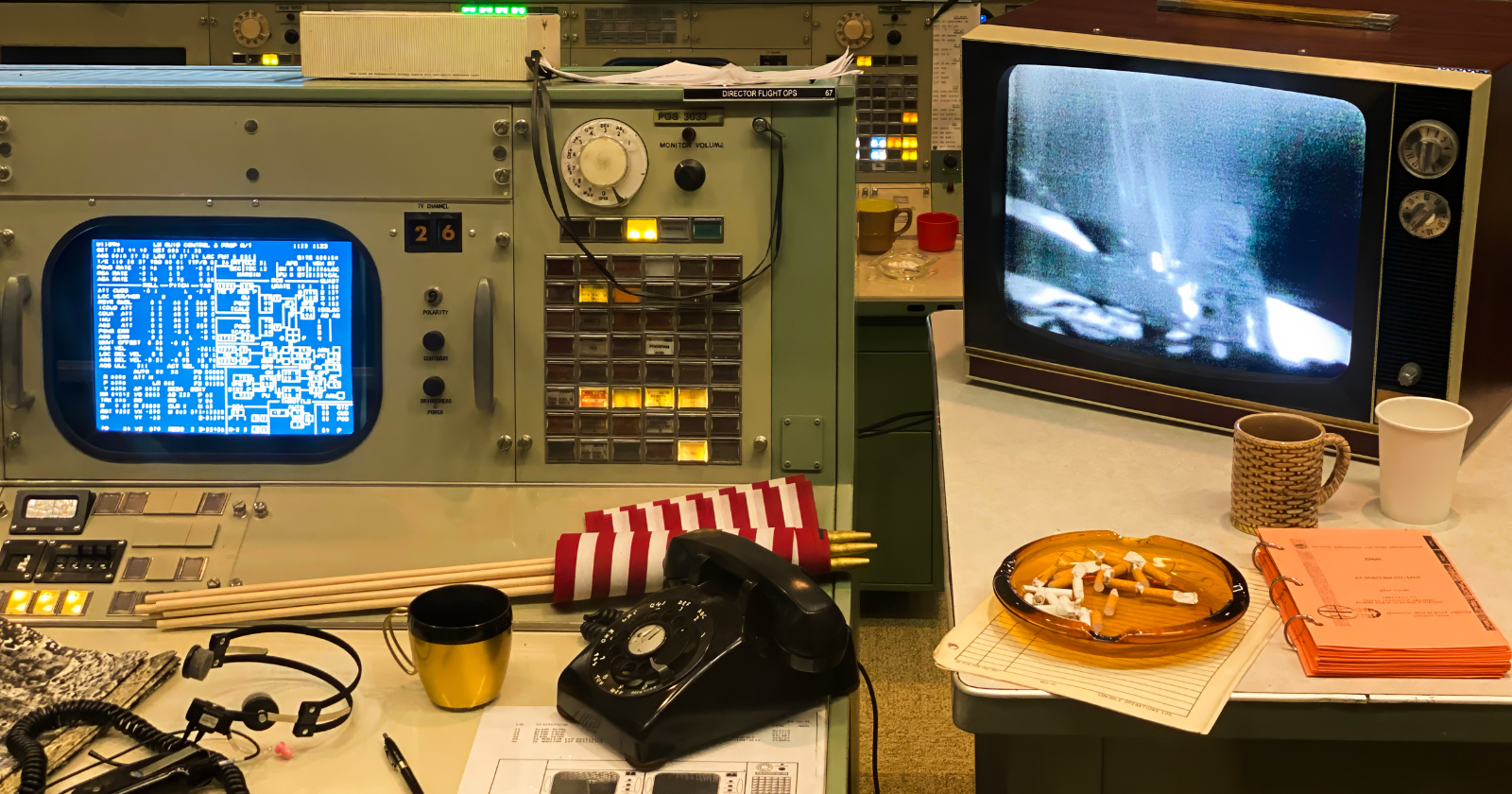
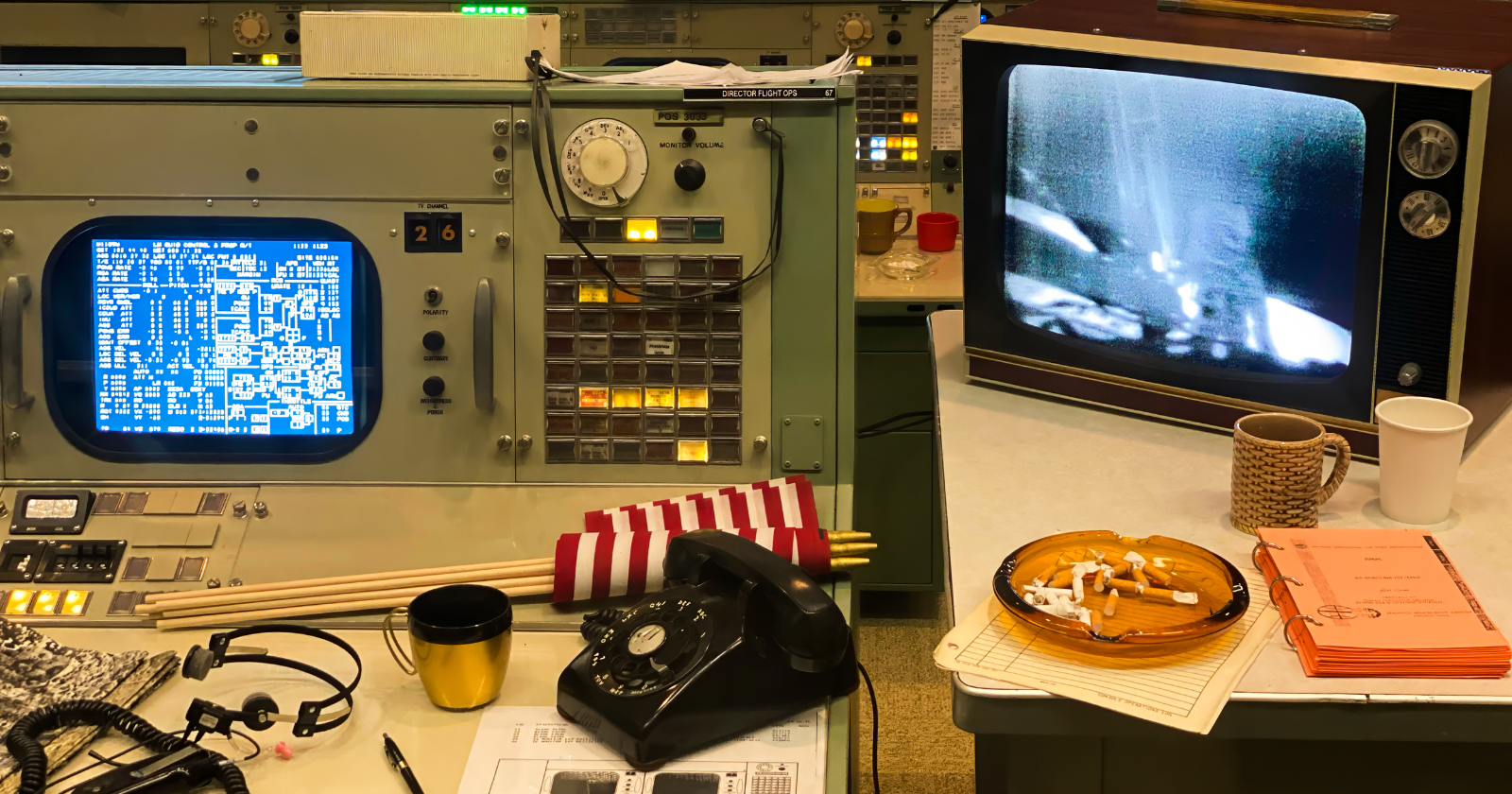
    The computer that landed Apollo 11 stored its code in “rope memory” that was physically woven by hand by a workforce of women in a Massachusetts factory, a wire through a magnetic ring meaning one and around it meaning zero, so the program that carried humans to the Moon was literally knitted into being. Featured Image
    Share
    Facebook Twitter LinkedIn Pinterest Email

    The lede above is true, and it is one of the stranger facts about the Apollo programme. The software that ran on the Apollo Guidance Computer, the small machine on board both the command module and the lunar module, was not written to a disc, a tape, or any other storage medium that could be edited. It was woven. By hand. Into wire.

    The storage technology was called core rope memory. The principle was simple. A magnetic ring was either threaded by a sense wire or not. Through the ring meant one. Around the ring meant zero. To store a program, you ran the wire through the rings in the pattern that represented the bits, in the right sequence, across thousands of cores. Once the wires were in place, the memory module was potted in epoxy and bolted into the spacecraft.

    The code was now hardware.

    How the rope was made

    The looms were not looms. They were specialised wiring rigs at the Raytheon plant in Waltham, Massachusetts. Wiring a single rope module took roughly eight weeks and cost about fifteen thousand dollars in 1960s terms. The Block II Apollo Guidance Computer, the version that flew on the crewed Moon missions, contained multiple rope modules. The arithmetic is straightforward. Each new build of the flight software meant another two-month manufacturing cycle, multiplied across rope sets, with the cost to match.

    The work was done by women. Many were recruited from the surrounding textile industry and from the nearby Waltham Watch Company, which had a long tradition of producing the kind of skilled precision labour the rope work demanded. The needle was hollow, with a length of fine wire fed through it. Two workers sat opposite one another, passing the needle through the matrix of cores while an automated jig positioned each ring under an aperture at the right moment. The wire either passed through the core or around it, and that was your bit. The position could not drift.

    Apollo engineers sometimes referred to this as the “LOL method,” for “Little Old Ladies.” Whether the term was widely used during the programme itself, or whether it became attached to the work afterwards, has been contested by historians of the AGC such as Ken Shirriff. What is not contested is that the women doing the work were skilled technical employees, inspected and re-inspected by both Raytheon and federal inspectors. Mary Lou Rogers, one of the weavers, has recalled in the Science News account that each component had to be looked at by three or four people before being signed off.

    What “no patches” meant

    Once a rope was woven, the program was finished. There was no way to fix it on the spacecraft. There was no way to fix it on the ground. A bug discovered late in testing did not produce a code change. It produced a new manufacturing order: another eight-week wiring cycle, another module, another set of inspections.

    This is the part of the story that quietly does most of the work. The phrase that gets repeated about the AGC, that it was “the computer that landed Apollo on the Moon,” is true but slightly off-centre. The more accurate phrase is that Apollo landed with the code that had been frozen months earlier, manufactured into copper and ferrite, and signed off by federal inspectors. The famous 1202 alarm during Armstrong and Aldrin’s descent was a response by frozen software to a real-time situation. The software did what the people on the ground hoped it would do, partly because Margaret Hamilton’s team at MIT had insisted on robust handling for exactly this class of overload. By the time the Eagle was on its way to the surface, the part of Hamilton’s argument that mattered most was already physically present in the wire.

    The framing worth being careful with

    The story of the rope weavers has been told a great deal, and most of the recent retellings carry one of two framings.

    The first is sentimental. It dwells on the image of skilled craftswomen knitting men to the Moon, on the contrast between domestic textile work and a high-prestige engineering programme. The contrast is real. It is also a contrast that does some flattening of its own. The women at Raytheon were not knitting in the front room. They were precision technical workers at a defence contractor, working to tolerances checked by government inspectors.

    The second framing is the corrective version, which insists that the work was skilled technical labour, that the affectionate “LOL” nickname undersold it, and that the standard sentimental account has functioned as a kind of soft erasure. This corrective is also right.

    What we find more interesting than either framing is the underlying fact of the period. For a stretch of years in the 1960s, the software that flew the most visible engineering project of the century was a physical artefact. It had to be designed, debugged, frozen, manufactured, inspected, and bolted in. The line between software and hardware, which has since become a foundational distinction of computing, did not yet exist in the form we now take for granted. A program was a thing you could weigh.

    What carries forward

    The technical lineage of rope memory is short. Apollo used it because it was light, dense, and effectively unerasable, which suited a flight environment where you did not want a stray particle event to flip a bit in your descent code. Once semiconductor memory became reliable enough for spaceflight, the rope went away.

    The organisational lineage is longer and less often noticed. The pattern of carefully verified, manufactured, signed-off code, frozen in advance of a mission, with no last-minute changes possible, has not entirely disappeared from spaceflight. Modern flight software is patchable in ways the Apollo software was not, but the verification regime around it still carries the shape of the older world: long lead times, multiple inspections, change-control discipline, and a strong cultural reluctance to ship code that has not been certified to within an inch of its life.

    The looms at Waltham are gone. Some of the discipline that surrounded them is not.

    Produced with AI assistance. Reviewed by the Make Tech Easier editorial team before publication. See our editorial policy and about page.

    About this article

    This article is for general information and reflection. It is not professional advice. For your specific situation, consult a qualified professional. Editorial policy →

    Apollo carried Code computer factory hand humans knitted landed literally magnetic Massachusetts meaning memory moon physically Program Ring rope stored wire Women Workforce woven
    Share. Facebook Twitter Pinterest LinkedIn Tumblr Telegram Email
    Previous Article‘It is such a fine line’: I am a CFP and see nothing wrong with networking on the golf course. Am I wrong?
    Next Article Is Wage Garnishment Ever Cheaper Than Student Loan Repayment?
    administración
    • Website

    Related Posts

    When survivors near Lake Nyos woke on the morning of 22 August 1986, the cattle were dead in the fields, the birds had fallen out of the trees, and 1,746 of their neighbours were lying where they had stood the night before, with no fire, no flood, and no wound to explain it.

    June 4, 2026

    When Soviet pilot Viktor Belenko landed a top-secret MiG-25 at a Japanese airport in September 1976, American engineers tearing it down expected to find titanium and microchips, and instead they found vacuum tubes, rivets popped by hand, and a stainless steel airframe so heavy it could only fly fast in a straight line.

    June 4, 2026

    When Clair Patterson set out in 1948 to measure the age of the Earth using lead in meteorites, his samples kept coming back contaminated, and the seven-year detour he took to find the source ended with him almost single-handedly forcing leaded gasoline out of American cars by 1986.

    June 4, 2026
    Add A Comment
    Leave A Reply Cancel Reply

    Top Posts

    This investing strategy digs deeper to find hidden stocks riding the AI wave

    June 4, 2026

    When survivors near Lake Nyos woke on the morning of 22 August 1986, the cattle were dead in the fields, the birds had fallen out of the trees, and 1,746 of their neighbours were lying where they had stood the night before, with no fire, no flood, and no wound to explain it.

    June 4, 2026

    House Spending Bill Would Eliminate Subsidized Student Loans To Pay For Pell

    June 4, 2026

    Subscribe to Updates

    Get the latest sports news from SportsSite about soccer, football and tennis.

    About Us

    Welcome to FinancBlog, your trusted online resource for personal finance insights, money management tips, and financial education designed to help you make smarter financial decisions.
    At FinancBlog, our mission is simple: to make personal finance easy, understandable, and accessible for everyone. Whether you are looking to save more money, understand banking products, explore loans, or build passive income streams, we provide well-researched and easy-to-read information to guide you.

    Facebook X (Twitter) Instagram Pinterest YouTube
    a1
    Top Insights

    This investing strategy digs deeper to find hidden stocks riding the AI wave

    June 4, 2026

    When survivors near Lake Nyos woke on the morning of 22 August 1986, the cattle were dead in the fields, the birds had fallen out of the trees, and 1,746 of their neighbours were lying where they had stood the night before, with no fire, no flood, and no wound to explain it.

    June 4, 2026

    House Spending Bill Would Eliminate Subsidized Student Loans To Pay For Pell

    June 4, 2026
    Get Informed

    Subscribe to Updates

    Get the latest creative news from FooBar about art, design and business.

    © 2026 inancblog.com. All rights reserved. Designed by DD.

    • About Us
    • Contact Us
    • Terms & Conditions
    • Privacy Policy
    • Disclaimer

    Type above and press Enter to search. Press Esc to cancel.

    Ad Blocker Enabled!
    Ad Blocker Enabled!
    Our website is made possible by displaying online advertisements to our visitors. Please support us by disabling your Ad Blocker.