

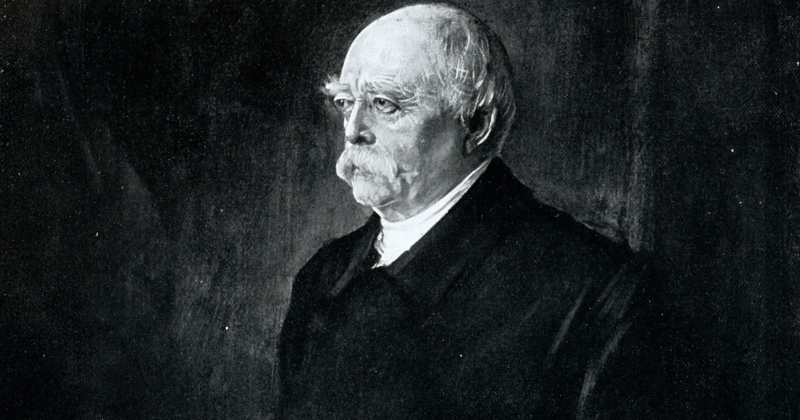
Otto von Bismarck was 74 when Germany adopted the world’s first national old-age social insurance program in 1889, and the age written into the system was older still: 70.
That number was not a warm Victorian gesture toward rest. It was a political calculation made inside a young German Empire where socialist parties were gaining votes, industrial workers were organizing, and Bismarck had already tried repression before he tried insurance.
The pension was real. It was also narrow, modest, and late in life.
Germany’s old-age social insurance program became the first of its kind at national scale in 1889, after earlier German laws had already created sickness insurance in 1883 and accident insurance in 1884. The old-age and disability insurance law paid benefits after permanent disability, or after a worker reached 70.
For most workers, that meant the promise sat at the far edge of life.
A 74-year-old chancellor built a pension age older than most workers would reach
Bismarck had been Chancellor of the German Empire since its founding in 1871. By 1889 he was an old man by the standards of his own century, still fighting for power inside the court of Kaiser Wilhelm II and still trying to shape the empire he had helped create.
He was not preparing to retire. He would be forced out the following year, in 1890, after a rupture with the young Kaiser.
The 1889 law did not invent old age. It invented a new state relationship to it. A worker who had paid into the scheme could receive an annuity after 70, while disability benefits could arrive earlier if the worker was permanently unable to work.
The machinery was bureaucratic, not sentimental. According to the History of Social Security project, the old-age and disability scheme was mandatory for people below a set income threshold, funded by workers, employers, and state subsidies.
The state was not simply giving money away. It was creating a contributory bargain.
The number 70 made the promise look larger than the bill
Germany in 1889 was not a country full of long retirements. Infant mortality pulled life expectancy at birth down sharply, infectious disease remained a major killer, and industrial work could consume a body long before old age did.
A surviving adult had better odds than a newborn life expectancy figure suggests. That distinction matters. Still, reaching 70 was late enough that the old-age pension would be collected by a limited share of workers, especially in the first decades of the system.
A contemporary English translation of the 1889 German law shows the system as an insurance program against disability and old age, not as a modern retirement lifestyle plan. The old-age pension was one branch of a wider insurance structure.
That is why the common modern shorthand can mislead. Bismarck did not create retirement as a 20-year stage of leisure. He helped create a state-backed insurance claim at the far end of working life.
The difference is everything.
Bismarck was fighting socialism with insurance
The pension law sat inside a political campaign. Bismarck had spent years trying to weaken Social Democracy, including through anti-socialist laws that restricted socialist organizations, meetings, and publications.
The bans did not solve his problem. Socialist candidates kept drawing support from workers.
Social insurance gave Bismarck another weapon. If the worker wanted security, the empire would provide it through law, contribution records, offices, stamps, and state authority, not through a socialist future promised from the opposition benches.
The U.S. Social Security Administration’s historical account describes Bismarck’s motive as partly economic and partly political: social insurance was meant to support workers while also heading off more radical socialist alternatives. A German policy history from the Bundeszentrale für politische Bildung similarly places the 1889 law inside Bismarck’s broader social legislation.
The pension was a benefit. It was also a loyalty machine.
The age later dropped to 65, and that number travelled
The original German old-age pension age was 70. In 1916, during the First World War, Germany lowered it to 65.
That later change is often confused with the 1889 law. The Social Security Administration explicitly warns against the myth that Germany started with 65, or that the United States simply copied Bismarck’s original number. Germany began at 70 and lowered the age 27 years later.
When the United States passed the Social Security Act in 1935, age 65 became the central American figure for old-age benefits. The reasons were not as simple as copying Bismarck. U.S. officials were looking at existing state pension systems, private pension practice, and the new federal railroad retirement system, many of which clustered around 65 or 70.
What travelled was not one clean German formula. It was a bureaucratic habit: choosing a fixed age at which work, contribution records, and state payments would suddenly meet.
That habit became one of the most powerful defaults in modern life.
The arithmetic changed because old age changed
The original German system assumed that old-age pensioners would be relatively rare and that disability would matter as much as age. Modern pension systems face a different world.
Today, a person who reaches 65 in the United States can often expect many more years of life. The Social Security Administration’s actuarial life table used for the 2024 Trustees Report shows remaining life expectancy at 65 measured in decades, not a handful of months.
That does not mean the 1935 American system was designed so almost nobody would collect. The SSA’s own history rejects that myth. It does mean that longer lives have steadily changed the cost and meaning of old-age insurance.
A pension that began as protection against rare late-life destitution became the financial spine of a long final stage of adulthood.
Retirement became a stage of life after the machinery already existed
Before national pension systems, most people did not move cleanly from school to work to retirement. Farmers worked until they could not. Craftspeople slowed down. Older relatives moved into households where family labor and care blurred together.
The modern idea is different. It gives life a calendar hinge: work before this date, pension after it.
Bismarck did not design the psychology of that hinge. He designed a political and financial instrument inside a specific empire, under pressure from a specific labor movement, using the actuarial assumptions of a specific century.
The human meaning arrived later.
By 2025, Pew Research Center was surveying Americans not only about whether they had enough money as they aged, but about how income, health, and later-life work shaped the experience of growing older. Its report on aging and finances shows a retirement-age population that is far more varied than the old image of a single pensioner at the end of a single working life.
Some people leave work with savings. Some keep working. Some retire and return. Some never fully stop.
The fixed age remains, but the lives around it have multiplied.
The old number still echoes
Bismarck died in 1898, at 83, well past the age at which the pension age in his own system began. He had not lived as the kind of wage worker the law was built to classify, insure, and discipline.
The number outlived him anyway.
Seventy became 65. Sixty-five became a symbol. Then longer lives, lower birth rates, and expanding welfare states turned that symbol into one of the central budget fights of the modern world.
Underneath those fights is still the shape of the old German bargain: pay in while you can work, collect when age or disability makes work impossible, and trust the state to keep the ledger open long enough for your name to appear.
In 1889, that name was expected to appear late, if it appeared at all. The strange part is that the rare old worker at the edge of Bismarck’s table became a normal figure in modern life: the pensioner with decades still ahead, living inside a promise that began as a political maneuver in a Prussian office.
