

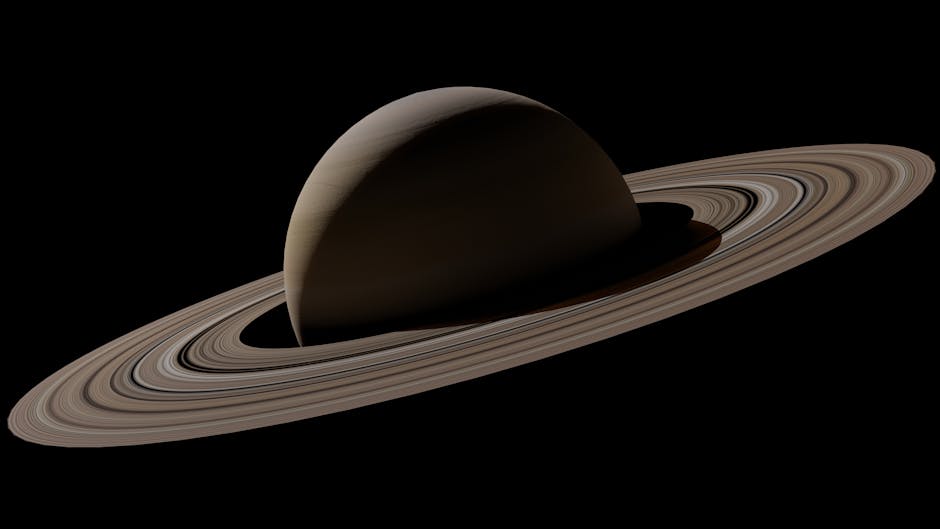
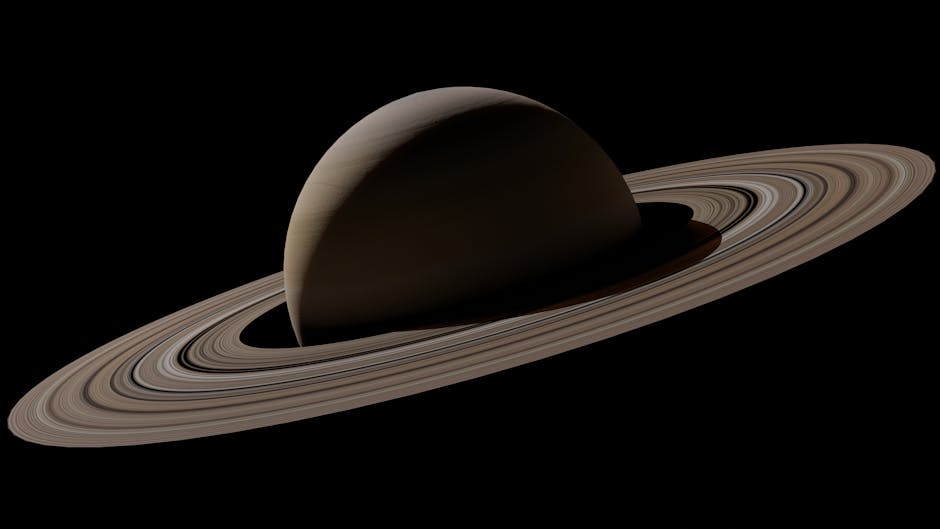
On 15 September 2017, Cassini stopped talking. The spacecraft had spent its final minutes plunging into Saturn’s upper atmosphere at roughly 70,000 miles per hour, firing its thrusters at full strength to keep its antenna pointed at Earth while the gas giant tore it apart. The engineers who built it, and the team who flew it in orbit around Saturn, had spent the better part of two years planning this specific death. They called it the Grand Finale. The reason it had to happen this way had almost nothing to do with the rings of Saturn and almost everything to do with a small, bright moon called Enceladus.
Cassini was running out of fuel. That part was simple physics.
What was not simple was what to do with a one-ton plutonium-powered probe that could no longer reliably steer itself. Left alone in Saturn’s gravitational neighbourhood, its orbit would drift. Eventually, perhaps in decades, perhaps in centuries, it would hit something. And the something NASA refused to risk hitting was Enceladus.
The moon that changed the mission
Cassini launched in 1997. Enceladus, when the mission was being designed, was a footnote, a small iceball that Voyager had photographed at distance. It looked dead. Astronomers expected it to be dead. Small moons cool quickly, and Enceladus is very small.
Then, in 2005, Cassini flew close and saw the plumes.
Jets of water vapour and ice were shooting hundreds of miles into space from cracks near the moon’s south pole, the so-called “tiger stripes.” By 2014, a research team led by Carolyn Porco at the Space Science Institute had catalogued 101 individual geysers, traced each one to a hot spot on the surface, and concluded that the source was almost certainly liquid water connected to a subsurface ocean.
That ocean is the whole story.
Why a buried ocean matters
An iceball does not heat itself. Something has to keep that water liquid against the cold of the outer solar system, and the leading explanation, worked out in part by Francis Nimmo at UC Santa Cruz, involves frictional heating along the tiger-stripe faults as Saturn’s gravity flexes the moon. The rubbing generates heat. The heat keeps a global ocean liquid beneath the ice.
Cassini flew through the plumes. Repeatedly. Its mass spectrometer tasted the spray and found water, salts, ammonia, methane, molecular hydrogen, and complex organic molecules. Hydrogen in particular is significant because, on Earth, hydrogen produced by water-rock reactions at hydrothermal vents feeds entire ecosystems of microbes that need no sunlight at all.
A 2025 modelling study using supercomputer simulations of Enceladus’s interior tightened the picture further, suggesting the ocean is in active contact with a rocky seafloor and circulating in ways that would, on Earth, be considered habitable.
So: liquid water, chemical energy, organic compounds, heat. Every box on the very short list of things life is thought to require.
This was the problem.
The contamination question
Cassini was not sterilised to the standard a probe sent deliberately to Enceladus would have been. It was built to study Saturn and Titan, and at the time of launch Enceladus was not yet known to have an ocean to protect. The spacecraft’s surfaces and interior cavities almost certainly carried bacterial spores from clean rooms in California and Europe, hardy organisms that can survive years of radiation and vacuum in dormant form.
If even one of those spores reached liquid water with the right chemistry, it could, in principle, take hold.
And then any future mission to look for native Enceladan life would be looking at a crime scene already contaminated by Earth.
The rules nobody outside NASA reads
Planetary protection is governed by the Outer Space Treaty, which obliges signatories to avoid “harmful contamination” of other worlds. The detailed protocols are set by COSPAR, the international Committee on Space Research, and worked out in detail by bodies like the U.S. National Academies, whose 2012 report Assessment of Planetary Protection Requirements for Spacecraft Missions to Icy Solar System Bodies sets out exactly the calculus Cassini’s planners were working from.
Enceladus falls into a category that requires strict controls on the probability of contamination over the timescale of concern.
The Cassini team could not guarantee that for an uncontrolled orbiter on a slowly decaying trajectory. They could guarantee it by burning the spacecraft to vapour in Saturn’s atmosphere, where the temperatures and pressures would destroy anything biological down to the molecular level.
The Grand Finale
The end-of-mission plan was approved years in advance. In 2017, Cassini began a series of dives between Saturn’s cloud tops and the innermost edge of its rings, a region no spacecraft had ever entered. The orbits did real science. They measured Saturn’s gravity field, sampled ring particles, and produced data on the planet’s magnetic field that researchers are still parsing years later.
They also drained the last of the fuel on purpose.
By 15 September, there was not enough propellant left to do another flyby of Titan, the manoeuvre that had been used for years to reshape Cassini’s orbit. The spacecraft was committed. It entered Saturn’s upper atmosphere, firing its thrusters to fight the torque of the gas, holding the antenna on Earth, sending back atmospheric composition data the entire way. Then the thrusters saturated, the antenna swung off-target, and the signal stopped.
The signal had already stopped by the time it reached Earth. The light-travel time from Saturn meant the spacecraft was already gone before the last bit arrived.
What it means for future missions
Cassini’s deliberate destruction set a precedent that has shaped every outer-planets mission since. Galileo, the Jupiter orbiter, had been disposed of the same way in 2003, plunged into Jupiter to protect Europa, another suspected ocean moon. Juno, at Jupiter, has a similar end planned. The Europa Clipper, which launched in 2024, is on a trajectory and sterilisation budget designed from the outset around the contamination question.
The legal and ethical framework is being rewritten in real time. Scholars are now arguing in venues like The Regulatory Review that the existing COSPAR rules were drafted for an era of a few government missions per decade and need updating for a future where private companies may send their own probes to the same moons. The Cassini decision is the case study everyone cites.
It was, in the end, an act of restraint. NASA had a spacecraft that still worked. It had instruments that still returned data. It could have been left in a parking orbit and quietly forgotten. Instead the team chose to destroy it, fully and verifiably, because the alternative was a non-zero chance of poisoning the most promising place in the solar system to look for life that did not come from Earth.
If anything is alive beneath the ice of Enceladus, it has never met us. Cassini’s last act was to keep it that way.
The plumes are still erupting. They have been erupting, as far as anyone can tell, for tens of millions of years, maybe longer, and they will keep erupting after every human alive today is gone. Somewhere above them, on a clear night through a good telescope, Saturn still looks the way it did centuries ago, a pale yellow disc with rings. The spacecraft named after its early observer is part of that planet now, scattered as atoms through cloud bands that will move and shift and forget it long before the next probe arrives.
