

Astronaut training is, by design, a long campaign against surprise. A crew member preparing for the International Space Station will spend years rehearsing failures: depressurisation drills, emergency procedures, the operation of systems they hope never to need. The point of all that repetition is to make the extraordinary feel procedural, so that nothing in orbit arrives unrehearsed.
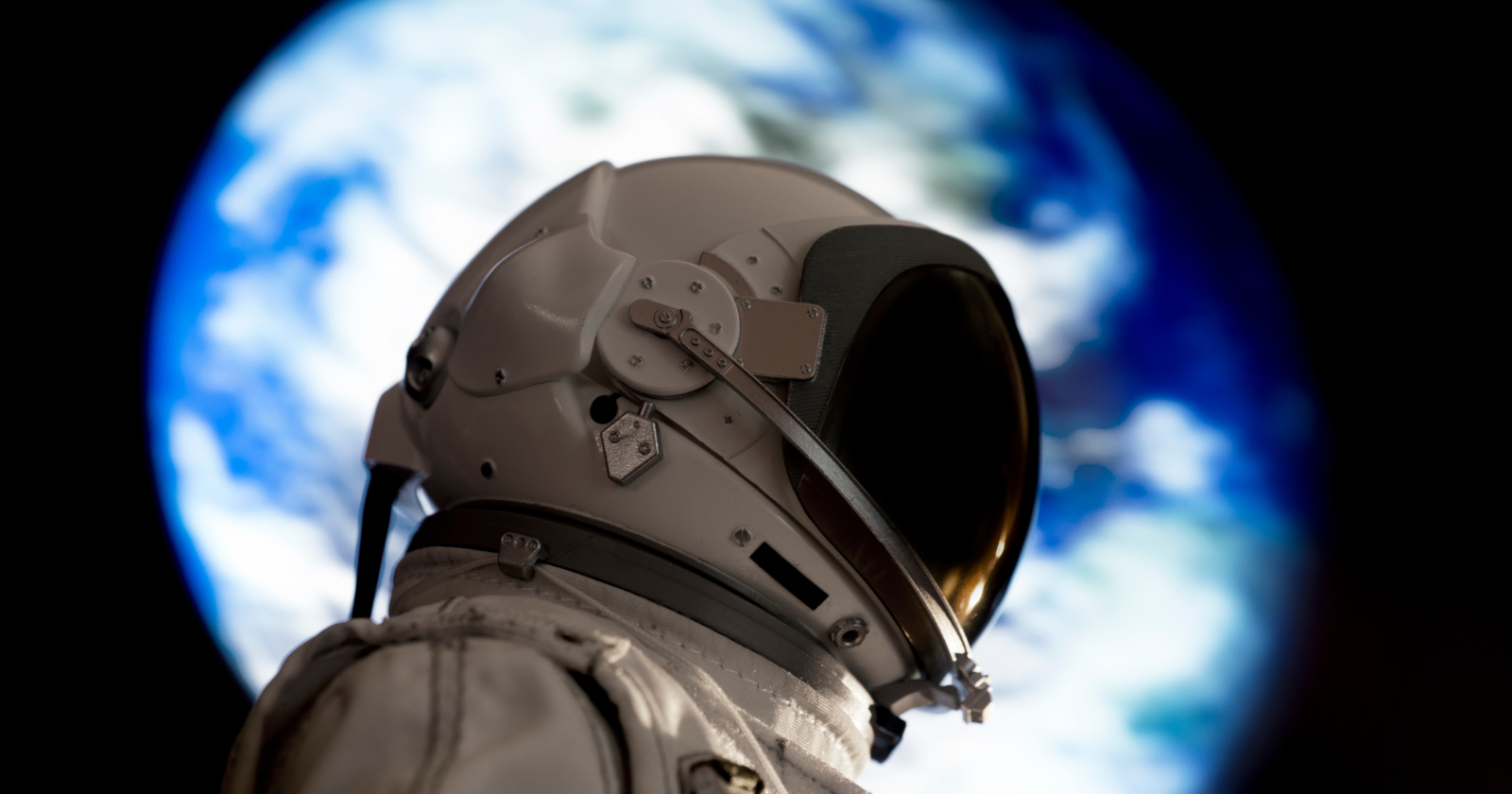
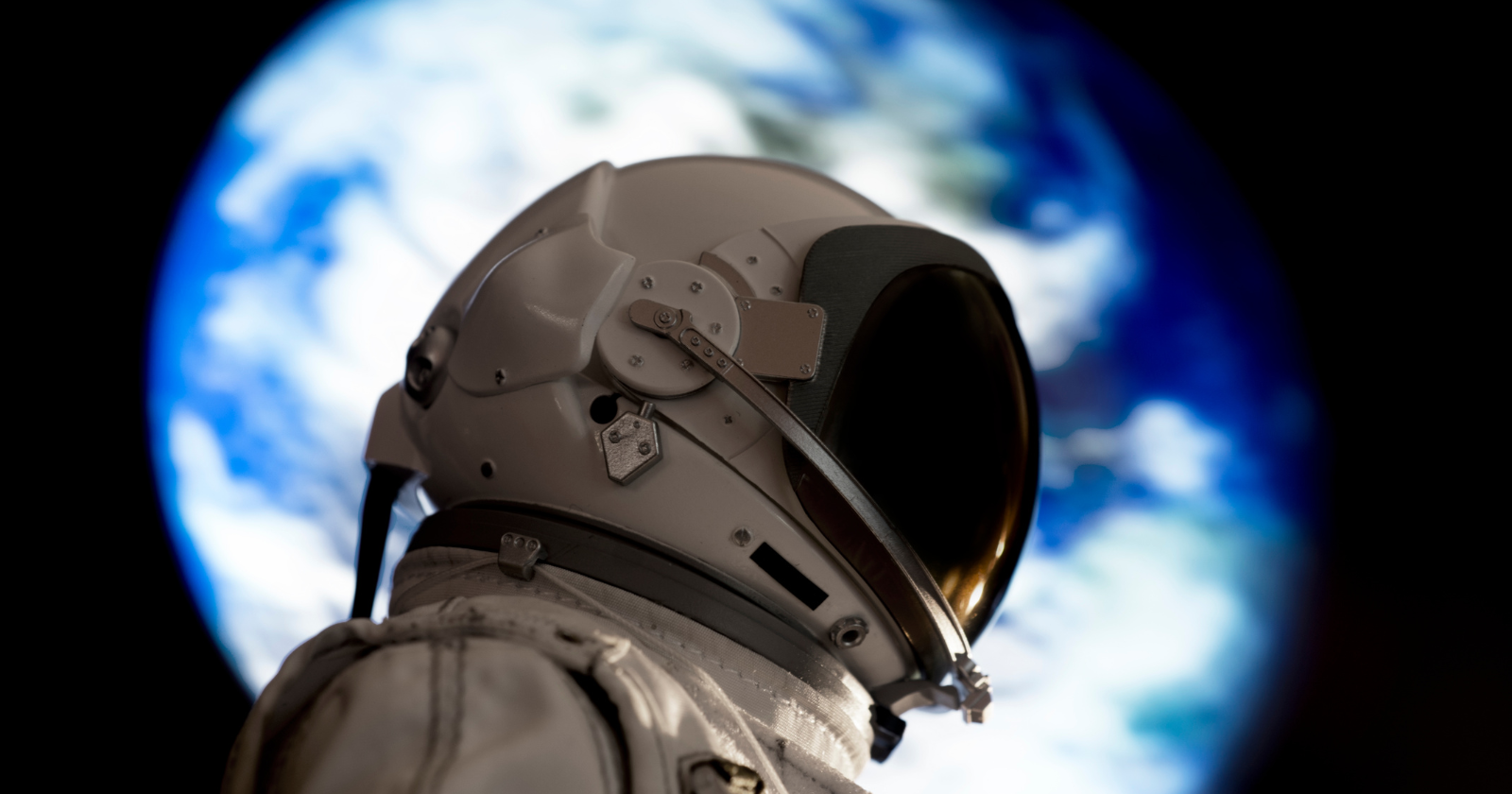
And then there is the window. Astronauts return again and again to one experience that the training did not, and arguably could not, prepare them for. They look down at Earth, and something shifts in how they understand it.
The accounts are consistent enough to have a name. They are also worth handling carefully, because the way this experience gets retold tends to be tidier and more certain than the evidence actually allows.
Where the name comes from
The phenomenon is usually called the overview effect. The term was coined by the author and space philosopher Frank White, who used it publicly in 1985 and set it out fully in his 1987 book of the same name. White’s idea began as a hypothesis: that people who saw Earth from orbit, or from further out, would come to perceive it as a single connected system rather than a collection of separate places, and that this shift would be a defining feature of the spaceflight experience.
He then went looking for evidence, interviewing astronauts and collecting their accounts. What they described lined up with what he had predicted. People came back talking about Earth as a whole, about the thinness of the atmosphere, about borders that were visible from the ground but not from orbit.
It is worth being precise about what that body of accounts is. It is a large collection of first-person testimony, gathered over decades, strikingly consistent in its themes. It is not, on its own, a controlled study. The consistency is real and it is interesting. It is also exactly what you would expect from a group of people drawn from similar backgrounds, sharing a rare experience, and increasingly aware of how earlier crew members had described it.
What the research actually says
The most often-cited academic treatment is a 2016 paper by David Yaden and colleagues, published in the journal Psychology of Consciousness: Theory, Research, and Practice, titled The Overview Effect: Awe and Self-Transcendent Experience in Space Flight.
It is useful to be clear about what kind of paper this is. Yaden and his co-authors did not run an experiment. They examined existing astronaut accounts and argued that the experience could be understood through psychological constructs that researchers already use to study people on the ground, principally awe and what the field calls self-transcendent experience. In their summary, the effect is best described as a state of awe with self-transcendent qualities, set off by a particularly striking visual stimulus.
This is a reading of the accounts, not a measurement of a mechanism. The paper proposes a framework. It does not establish that the overview effect is a single, neurologically defined event, and it does not show that the changes astronauts describe reliably last after they return home.
That distinction matters, because the popular version of the story tends to skip it.
Three things the retelling tends to overstate
The first is universality. The overview effect is often described as something that happens to astronauts, as though it were a guaranteed consequence of leaving the planet. It is not. The research literature, including the Yaden paper, is clear that not every astronaut reports it. Some describe the view in fairly matter-of-fact terms. A consistent pattern across many accounts is not the same as an inevitable one.
The second is durability. The most quoted accounts capture the experience in the moment, or shortly after, when the emotion is strongest. Whether the shift persists is a separate question. Some astronauts describe a lasting change in how they think about Earth and act on the ground. Others suggest the intensity softens with time, the way intense experiences generally do. The honest position is that the long-term data needed to settle this is thin.
The third is the role of expectation. Astronauts heading to orbit today are not encountering this idea cold. The concept has been part of public conversation about spaceflight for forty years. Veterans brief newer crew members. White has spoken to astronaut groups. The famous reflections of Apollo 9’s Russell Schweickart have been read by generations of candidates. When someone arrives at the cupola already knowing that a perspective shift is part of the experience, and already holding the vocabulary to describe it, that knowledge becomes part of what they bring to the window. None of this means the experience is invented. It means the experience and the expectation of it are now difficult to fully separate.
Why the gap is the interesting part
Set the overstatements aside and something genuine remains, and it sits exactly where the headline points: in the gap between what training covers and what it cannot.
The technical preparation for spaceflight is preparation for tasks. It teaches a person what to do. The view does not present a task. It presents Earth, all at once, with no edge and no other place to look, and it asks nothing of the person except that they take it in. There is no procedure for that. The skills that make someone an excellent astronaut, the calm and the rehearsal and the methodical handling of systems, are not the skills the cupola calls on.
What astronauts describe encountering there is, in plain terms, a fact they already knew becoming something they could feel. Everyone understands that Earth is a single planet, that the atmosphere is a thin layer, that human divisions are not drawn on the ground. These are not new pieces of information. The overview effect, in the careful reading, is not the arrival of new information. It is the conversion of abstract knowledge into something with the weight of direct perception. The thing nobody can fully prepare you for is not a fact about Earth. It is what it is like to see the fact.
What this does and does not tell us
There is an obvious temptation to extend all this into a larger claim: that if more people could see Earth from orbit, they would care for it differently, and that the overview effect is therefore an argument for human spaceflight, or for sending influential people up, or for engineering awe deliberately. Some researchers, including Yaden’s group, have shown genuine interest in whether awe of this kind might be reproduced for people who will never leave the ground.
That is a reasonable question to study. It is not something the existing accounts can answer. What astronauts have given us is a consistent, credible description of a perceptual shift, gathered from a small and unusual group, framed by a research literature that is still mostly theoretical. That is a real finding. It is also a modest one, and it does not yet carry the weight of the grander conclusions often hung on it.
What stays with us, reading the accounts, is the smallness of the trigger. Not a discovery, not an instrument reading, not anything the years of training produced. Just a person at a window, looking at the place they came from, and finding that it looked different than they expected, even when they had been told exactly what to expect.
