

In 1959, Soviet geneticist Dmitri Belyaev began a breeding experiment in Novosibirsk with a dangerous simplicity: choose only the silver foxes least likely to fear a human hand, and ignore everything else.
Genetics had been politically dangerous in the Soviet Union under Trofim Lysenko. Belyaev had already lost his Moscow post for his commitment to classical genetics, and the work had to be framed carefully inside the world of fur-animal breeding. The foxes gave him cover. They were valuable pelt animals, already housed on farms, but they were not domesticated.
Within a few generations, some of the foxes were wagging their tails at researchers. Within decades, the tame line showed floppy ears, curled tails, white patches in the coat, shorter and rounder snouts, and vocalizations that included barks and pant-like calls. The only thing selected was tameness.
That cluster has a name now. Biologists call it domestication syndrome, and the Novosibirsk foxes remain one of the clearest experimental demonstrations that changing an animal’s fear response can drag a whole body along with it.
What Belyaev was actually testing
The familiar explanation for domestic animals once seemed straightforward. Dogs had floppy ears because humans liked floppy ears. Cows had patches because people bred for patches. Rabbits became rounder and calmer because breeders preferred animals that looked and behaved that way.
Belyaev suspected something stranger. He thought the early pressure in domestication was not appearance, milk yield, wool, or even obedience. It was whether an animal could tolerate people without panic or attack.
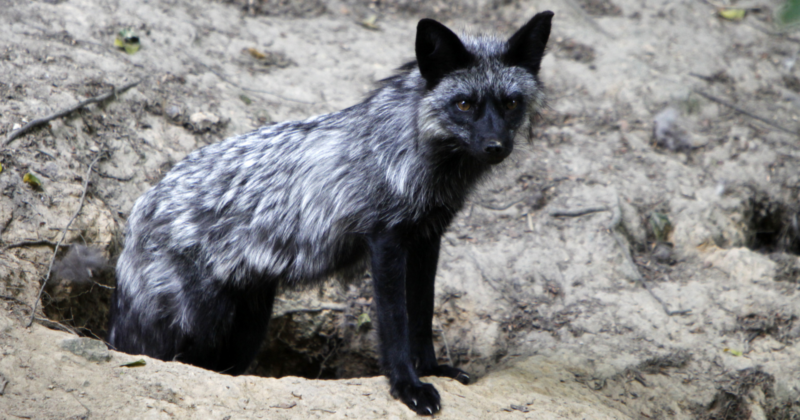
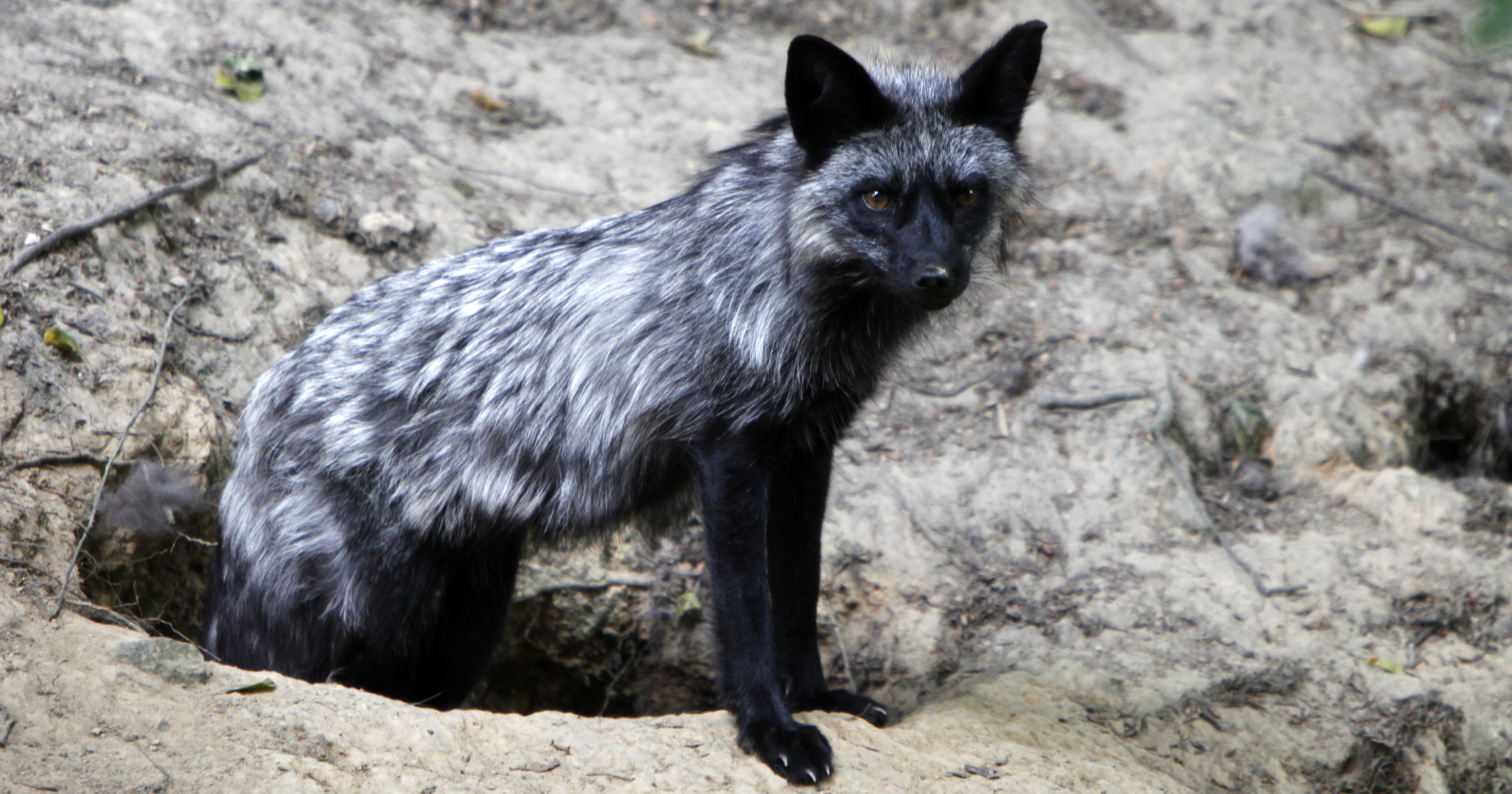
To test that, he needed an animal close enough to the dog to be meaningful, but wild enough that no one could say the results were inherited from earlier domestication. Silver foxes, a dark color form of the red fox, were ideal. They had lived around humans on fur farms for many generations and still reacted like wild animals.
The protocol was stark. Researchers approached cages, offered a protected hand or tested the foxes’ response to human proximity, and ranked the animals by how calmly they reacted. The calmest were bred to one another. Foxes that fled, snapped, or lunged were not used in the tame line.
The traits no one asked for
The first surprise was behavioral. By the fourth to sixth generations, some foxes were wagging their tails, whining when people left, licking hands, and seeking contact in a way that looked startlingly dog-like. Lyudmila Trut later described the experiment as an attempt to reproduce strong selection for tamability alone.
Then the bodies started changing. Some pups developed white patches, including a small star on the forehead. Some ears remained soft and folded. Some tails curled. Some faces became shorter and rounder. Females in the tame line also showed changes in reproductive timing.
The researchers had not chosen foxes for any of those details. They were not selecting white fur, drooping ears, curled tails, or shortened faces. They were selecting animals that did not recoil from people.
The vocal changes were part of the same pattern. Studies of fox vocal behavior found that tame, aggressive, and unselected silver foxes used different calls toward humans, including voiced calls such as whines, growls, cackles, and barks, and unvoiced calls such as pants and snorts. The tame foxes were especially likely to produce attention-seeking vocal activity around people.
Why the package may exist
The leading explanation centers on the neural crest, a population of cells in the early vertebrate embryo that migrates through the developing body. These cells help form pigment cells, parts of the skull and face, cartilage and other structures in the ear, parts of the peripheral nervous system, and the adrenal medulla involved in stress responses.
In 2014, Adam Wilkins, Richard Wrangham, and W. Tecumseh Fitch proposed that domestication syndrome could arise when selection for tameness produces mild changes in neural crest development. Their hypothesis links reduced fear and aggression to the same developmental system that helps shape pigmentation, jaws, teeth, ears, and stress physiology.
The idea is not that one gene magically produces a pet fox. The genetics are complex, and the hypothesis is still being tested. But the pattern is hard to ignore: when mammals become easier to live with, many of them also become patchier, softer-eared, shorter-faced, and more juvenile in behavior.
Dogs, pigs, cattle, horses, rabbits, goats, and other domesticated mammals show overlapping pieces of that suite. The Novosibirsk foxes mattered because the researchers could watch the package appear under controlled selection, generation after generation.
The control group that bit
One reason the fox experiment became so influential is that the Novosibirsk team did not only breed for friendliness. From the same broad farm-fox background, they also maintained foxes selected for the opposite response: aggression toward humans.
That aggressive line began later, in 1970, and it made the contrast brutal. Tame foxes approached people, wagged, whined, and sought contact. Aggressive foxes lunged, bit at protective gloves, and threw themselves toward the front of the cage when a person came near.
The difference was not diet, species, or farm mythology. It was selection. The tame and aggressive strains were bred under the same long-running program, but in opposite behavioral directions.
Modern genetic work has begun mapping those differences. A 2018 red fox genome study compared tame, aggressive, and conventional farm-bred foxes and identified genomic regions associated with the response to selection. A related study found differences in brain gene expression between tame and aggressive foxes, including pathways tied to serotonin and glutamate signaling. The same work also implicated genes important in neural crest cell function.
Belyaev did not live to see the full story
Belyaev died in 1985. By then, the experiment had already shown that selection for behavior could move quickly, but many of the genetic tools needed to understand the mechanism did not yet exist.
The work continued under Lyudmila Trut, who had joined the project as a young graduate of Moscow State University and became its central witness, caretaker, and interpreter. Her work with Belyaev turned a breeding program on a Siberian fur farm into one of the most famous long-term experiments in evolutionary biology.
Trut died in Novosibirsk on October 9, 2024, just before her 91st birthday. Scientific American described the silver fox work as the gold standard for understanding domestication, and her book with biologist Lee Alan Dugatkin remains one of the most accessible accounts of the experiment.
The farm survived the collapse of the Soviet Union, funding crises, and pressure to keep the animals alive by selling some of them as pets or breeding stock. The tame foxes are still not dogs. They can scent-mark, dig, escape, and behave like foxes in ways no apartment owner would mistake for a spaniel.
What it might say about humans
The fox results pushed some researchers toward a larger question. If selection against reactive aggression can produce a recognizable suite of physical and behavioral changes in mammals, could something similar have happened inside the human lineage?
The idea is called the self-domestication hypothesis. In its cautious form, it argues that as human groups became larger and more socially interdependent, individuals with lower reactive aggression may have had an advantage, and that this pressure may have contributed to some traits that distinguish modern humans from more archaic relatives.
The evidence is suggestive, not settled. Human evolution is not a fox-breeding experiment, and fossils do not preserve temperament. But researchers including Richard Wrangham have argued that reduced reactive aggression is a plausible evolutionary target in human self-domestication. The hypothesis remains active, debated, and incomplete.
The foxes made the question harder to dismiss. They showed, in real time, that selecting for one behavioral trait can quietly reshape the body, the voice, the reproductive cycle, and the way an animal meets another species at the front of a cage.
What the foxes still show
A visitor to the Novosibirsk farm would not need a genome browser to see the difference. On one side, foxes selected for aggression react to people as threats. On the other, tame foxes press forward, wag, vocalize, and solicit contact.
Some have one floppy ear and one upright. Some have the white star on the forehead. Some carry tails that curl upward over the back. They still smell like foxes, move like foxes, and carry the genome of red foxes shaped by decades of human choice.
The unsettling part is how little was on the list. Not the ears. Not the patches. Not the curled tails. Not the bark-like calls. The researchers reached for calm, and the foxes answered with a whole animal changed around it.
