

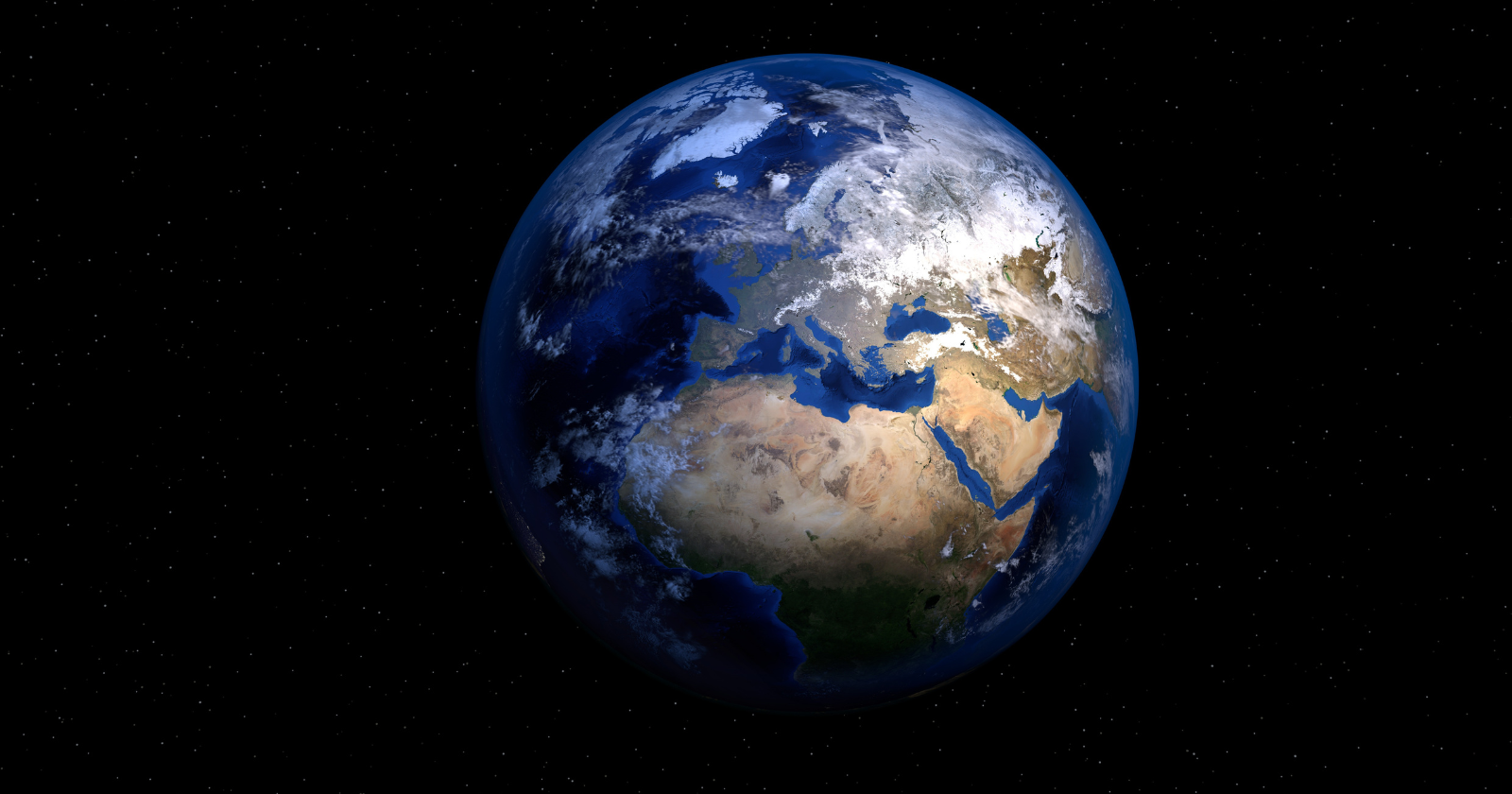
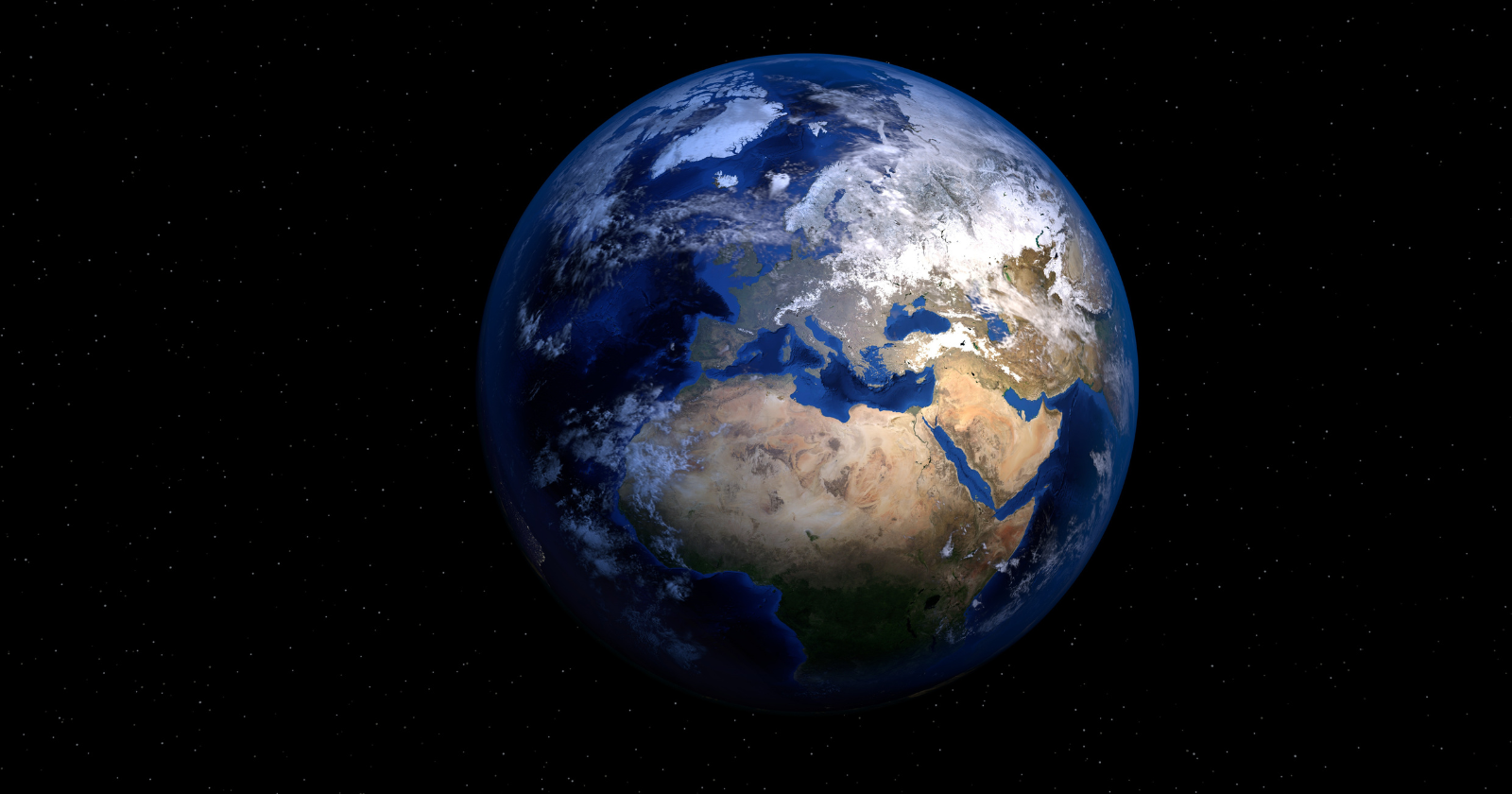
From 6 billion kilometres out, Voyager 1 looked back in 1990 and found Earth reduced to a pale blue speck smaller than one pixel, a shot Carl Sagan had spent years fighting for
In 1990, NASA’s Voyager 1 spacecraft turned its cameras back toward the inner solar system and photographed Earth from about six billion kilometres away. The planet registered as a point of light less than a single pixel across, sitting inside a band of scattered sunlight. NASA later called the frame the Pale Blue Dot.
The image was taken on 14 February 1990, as part of a sequence of 60 frames known as the Family Portrait of the Solar System. By the standards of the mission, it was scientifically close to worthless. At that distance no planet would show useful detail, and the imaging team knew it. The photograph happened anyway because the astronomer Carl Sagan, a member of Voyager’s imaging team, had spent most of a decade arguing for it.
That argument, rather than the frame itself, is the part worth revisiting.
What the image actually shows
Earth occupies roughly 0.12 of a pixel in the original frame. According to NASA, it is a faint speck, easy to mistake for a flaw in the camera or a stray mark on a print.
The band of light Earth sits in is the detail most often misread. It looks like a shaft of sunlight falling across the planet, and it is routinely described that way. It is not. The bands are an artefact of pointing a camera close to the Sun: light scattering inside the instrument’s optics. Earth’s position within one of them is coincidence. The planet was not lit by a beam. It happened to fall where the camera’s own glare landed.
This matters because an accidental composition has been read, again and again, as something deliberate. The frame is more honest than that. It is a faint dot in a noisy image, and whatever weight it carries comes from what the dot is, not from how it appears to be lit.
You can view the image here on NASA’s website.
Eight years and six requests
Sagan first floated the idea in 1981, the year after Voyager 1’s encounter with Saturn. According to NASA, the Voyager team turned down several requests to take the images, citing limited engineering resources and the danger of pointing the cameras near the Sun. By NASA’s own account, it took eight years and six requests before the sequence was approved.
The caution was not unreasonable. Voyager 1’s cameras used vidicon tubes that could be damaged by direct sunlight, and the mission still had scientific work ahead of it. Voyager 2 had planetary encounters at Uranus in 1986 and Neptune in 1989. Spending the spacecraft’s remaining camera life, and risking the optics, on a frame with no scientific return was a genuine trade-off rather than a formality.
Approval came only once the planetary science was effectively finished. NASA administrator Richard Truly cleared the sequence, and on 14 February 1990 Voyager 1 took the Family Portrait: 60 images covering six planets and the Sun. The Earth frames were captured at 04:48 GMT. NASA’s account notes that the spacecraft’s cameras were switched off 34 minutes later, to conserve power for the long cruise outward. The full set of images took until 1 May 1990 to reach Earth, arriving over several passes of the Deep Space Network.
Why the photograph needed the words
When the frames were assembled at the Jet Propulsion Laboratory, the result was underwhelming as imagery. None of the planets showed real detail. Earth was a smudge of light. As a picture, it asked a great deal of the viewer.
What gave the image its standing was Sagan’s 1994 book, which took Pale Blue Dot for its title. The passage he built around the frame, beginning with the observation that everyone who has ever lived did so on that single point of light, is what most people actually remember. Sagan wrote of the dot: “That’s here. That’s home. That’s us.”
The photograph established a fact: seen from far enough away, Earth is very small. Sagan’s prose gave that fact its meaning. This is worth stating plainly, because the image is often credited with an eloquence it does not have on its own. A faint frame became one of the most reproduced photographs in history because Sagan paired it with the right words. The two have rarely been separated since.
The last portrait of its kind
Voyager 1 is now more than four times as far from Earth as it was in 1990. It crossed into interstellar space in 2012 and remains the most distant human-made object. Its cameras have been off for more than three decades, and there is no practical way to switch them on again for a photograph. In effect, the Pale Blue Dot is the last image of this kind the mission produced.
No spacecraft since has taken a comparable family portrait of the solar system from that distance, and there has been no operational reason to. The vantage point Voyager 1 had in 1990 was a by-product of a mission built for other purposes. Recreating it deliberately would be an expensive exercise with, again, little scientific return.
NASA reprocessed the image in 2020 for its 30th anniversary, applying modern software to the original 1990 data without adding anything that was not already there. NASA’s account of the image still describes Earth plainly, as a speck of light. That is likely the last time the frame will change. The vantage point cannot be recreated with current hardware, and Voyager 1’s cameras will not be turned on again.
