


Key Points
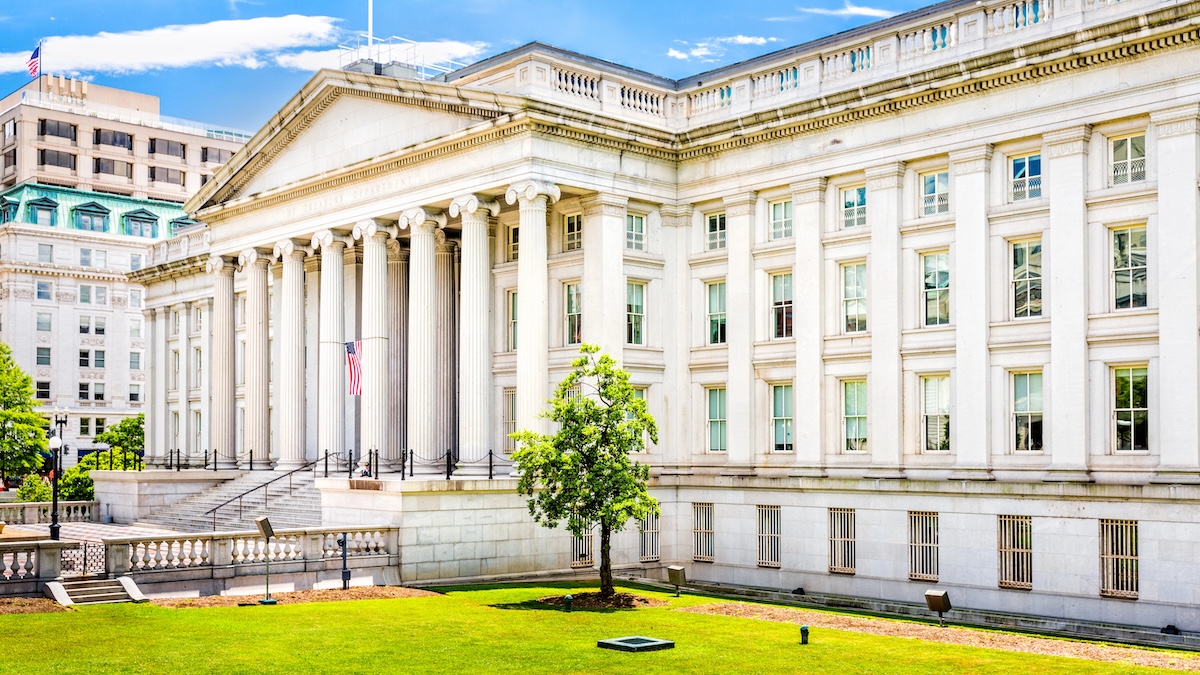
- The Department of the Treasury is set to take over servicing of $179 billion in defaulted federal student loans owed by 7.8 million borrowers (about 18% of all federal student loan borrowers) under a March 2026 interagency agreement with the Department of Education.
- A new Congressional Research Service report finds the transfer would more than quadruple the number of debtors Treasury’s collection program handles, at a time when the Bureau of the Fiscal Service has lost roughly 40% of its workforce.
- A 2017 test of Treasury collecting student loans found Treasury resolved defaulted loans at a lower rate than the Education Department’s contracted collection agencies.
The federal government’s defaulted student loan portfolio is changing hands, and a new report from the Congressional Research Service (CRS) offers the most detailed public look yet at what that transition involves — and where it could run into trouble.
The report examines the interagency agreement signed March 19, 2026, between the Department of Education (ED) and the Department of the Treasury. Under Phase 1 of that agreement, Treasury’s Bureau of the Fiscal Service is to gradually assume responsibility for servicing defaulted federally held student loans through its Cross-Servicing Program, the centralized debt collection operation it already runs for most other federal agencies.
The stakes are large. As of December 31, 2025, about 7.8 million borrowers (roughly 18% of all federal student loan borrowers) owed $179 billion in defaulted federal student loans.
That figure has climbed sharply: defaulted balances stood at $117.3 billion on September 30, 2025, then jumped to $179 billion by December 31 — an increase of more than $60 billion in a single quarter as pandemic-era protections wound down and more borrowers fell behind. We should get the next quarterly report soon, and it’s expected to rise even further as payments restart.
Would you like to save this?
Why The Government Is Making The Switch
According to the press release that accompanied that agreement, the two agencies say the Education Department is “ill-equipped” to manage the size and complexity of the federal student loan portfolio, and that Treasury brings expertise in “managing highly complex financial and information technology systems” and in collecting delinquent debt for other federal agencies.
There is some history behind the partnership. Treasury already runs the Treasury Offset Program, which the Education Department uses to seize federal payments such as tax refunds from defaulted borrowers. The two agencies have also contracted with an overlapping set of private collection agencies, and Treasury data already supports income verification for the FAFSA and income-driven repayment plans.
The agreement has three phases:
- Phase 1 covers defaulted loan servicing.
- Phase 2 would shift administrative operations for servicing non-defaulted loans to Treasury “to the extent practicable.”
- Phase 3 would have Treasury review the rules governing student aid eligibility, including administration of the FAFSA.
The CRS report focuses only on Phase 1, and notably, the agreement sets no timeline for any phase.
Since 2001, the Education Department has held an exemption from the federal law that otherwise requires agencies to send seriously delinquent debt to Treasury for collection. According to the interagency agreement, Treasury “intends to revoke” that exemption — formally ending a 25-year arrangement under which ED collected its own defaulted loans.
Critics, including Senate Democrats led by Sen. Elizabeth Warren, argue that Treasury “lacks expertise in the highly unique and complex federal student loan system” and that the Fiscal Service may not be adequately staffed for the job.
Collections Have Generally Been Paused For The Last 6 Years
The transition comes after years in which federal student loan collections nearly stopped. Most collection activity on defaulted federal loans has been suspended since March 2020, first because of pandemic relief policies and more recently because ED paused wage garnishment and Treasury offsets again in January 2026 while it implements repayment reforms from the 2025 budget reconciliation law.
The numbers in the CRS report show how dramatic the slowdown has been. In fiscal year 2019, the government collected $6.56 billion from defaulted borrowers through litigation, voluntary payments, wage garnishment, and offsets of tax refunds and other federal payments. In fiscal year 2025, it collected just $560 million — a 91% decline. Administrative wage garnishment, which brought in $1.34 billion in 2019, collected just $510,000 in 2025.
The Education Department also dismantled much of its collection machinery during this period. In November 2021, it cancelled its contracts with private collection agencies and never hired replacements, leaving its in-house Default Resolution Group to manage the entire defaulted portfolio.
Treasury, meanwhile, has its own capacity questions. Its Cross-Servicing Program currently handles about 1.9 million debtors owing $119.1 billion.
Absorbing the student loan portfolio would add roughly 7.8 million debtors and $179.1 billion (more than quadrupling its debtor count) even as the Fiscal Service workforce shrank about 40% between September 2024 and February 2026.
Treasury has signaled it plans to lean on contractors: in March 2026 it published a request for information seeking industry input on hiring “default resolution agent” firms to help service the loans.
Treasury Has Tried This Before
Perhaps the most striking finding in the CRS report involves a little-known pilot program from a decade ago. In February 2015, the Bureau of Fiscal Service (BFS) took over collection of a representative sample of 16,242 defaulted student loans (about $80 million owed by 5,729 borrowers) to test whether it could do the job.
After one year, Treasury’s own report found it was less successful than ED’s contracted collection agencies across every metric measured. The BFS resolved 4.14% of the loans referred to it, compared with 5.46% for the control group handled by private collection agencies.
Treasury attributed the gap partly to its own choices (it delayed wage garnishment for most borrowers for 11 months and called borrowers no more than once a week) and partly to lacking the specialized systems and self-service portals that student loan collectors had built. It also found that student loan borrowers were harder to reach than other federal debtors, that calls ran “materially longer” because of the complexity of options like loan rehabilitation, and that the rehabilitation process itself was “difficult to complete.”
The pilot ended in October 2017, earlier than planned, and no final report is publicly available.
What This Means For Borrowers In Default
For the 7.8 million borrowers with defaulted federal loans, the report points to several things worth knowing.
First, involuntary collections remain paused for now. Wage garnishment and Treasury offset have been on hold since January 2026, though that pause is described as temporary. When collections resume, borrowers in default could see up to 15% of their disposable pay garnished, their full federal tax refund offset, and a portion of Social Security benefits withheld. Many states also garnish state tax refunds in partnership with Treasury.
Second, the resolution paths out of default (loan rehabilitation, consolidation, and payment in full) remain available, but borrowers may be dealing with new entities, letters, and phone numbers. Under the agreement, BFS will send borrower communications, set up payment plans, and initiate garnishment, while ED’s Default Resolution Group continues processing rehabilitation applications under Treasury’s oversight.
Third, collection costs may be passed along. The agreement authorizes the Fiscal Service to assess its fees as costs on borrowers whose loans are referred for collection, within limits ED sets. Collection costs add up to 20% to the total cost of repayment – making collections far more expensive than enrolling in a repayment plan.
One piece of good news buried in the report: effective July 1, 2027, borrowers will be permitted to rehabilitate their loans twice instead of once, giving those who default again a second chance at the program.
Don’t Miss These Other Stories:
Repayment Assistance Plan (RAP) Student Loan Calculator
Best Student Loan Refinance Lenders In 2026
Student Loan Identity Theft: What To Do If Someone Took Out Loans In Your Name
Editor: Colin Graves
The post 7.8 Million Student Loan Borrowers Are About to Deal With a New Debt Collector: The U.S. Treasury appeared first on The College Investor.
