

Masahiro Hara was trying to make a factory scanner read faster when his team at Denso built the QR code in 1994, a black-and-white square that could hold far more information than a barcode and still be read when it was dirty, tilted, or partly damaged.
The problem sounded small because it belonged to an assembly line. Toyota-linked factories were handling more parts, more variants, and more tracking data than a strip of vertical barcode lines could comfortably carry.
Two years of development later, Hara’s team had a code that could be read from any direction and packed data both horizontally and vertically. Denso released it under an open patent strategy, and the shape began its life as industrial plumbing rather than consumer technology.
For years, that was mostly where it stayed.
A car-parts problem hiding in plain sight
The original brief came from manufacturing. Conventional barcodes could track products, but they stored information in one direction, so a complex part could need several labels just to carry the part number, lot, destination, and process information.
Denso’s own history says the QR code was born from factory feedback in 1994: workers wanted a way to handle product information more efficiently, with a code that could store more data, read quickly, and withstand dirt on the production line. Denso describes the code as a product of automotive manufacturing rather than a consumer-web invention.
Masahiro Hara led the development effort. Denso Wave’s history of the project says the team wanted a two-dimensional code that scanners could recognize quickly even when the printed square was rotated or surrounded by other marks. The three large corner patterns became the visual trick that made that possible.
Those corner marks are not decoration. They are position detection patterns, the landmarks a scanner uses to locate the code and understand its orientation before it begins reading the data inside.
Make Tech Easier’s anatomy of a QR code breaks down the same idea from the reader side: a QR code works because the phone or scanner can first map the grid, then decode the black and white modules inside it.
The open patent mattered as much as the pattern
Denso held patent rights to the QR code. The crucial decision was that it did not use those rights to block ordinary standardized use.
Denso Wave says it retained the patent rights while declaring that it would not exercise them, because the developers wanted the QR code to be used as widely as possible. Its official history presents that decision as one of the main reasons the code spread.
The company’s patent page is more precise: standardized QR codes that follow JIS or ISO standards can be used freely, while nonstandard versions may raise separate patent questions. That distinction matters because “free to use” does not mean every altered symbol using QR-like geometry is automatically outside patent concern.
The Japan Patent Office tells the corporate story carefully. A division of Denso Corporation began development, and the project was later transferred to Denso Wave. That makes Toyota part of the origin story through the Toyota Group and its manufacturing needs, but not the inventor of the QR code itself.
The engineer was Hara. The company was Denso. The industrial setting was Toyota-linked manufacturing.
Why the square could wait for the phone
The QR code did not fail in the years after 1994. It worked very well in the places it had been built for: factories, logistics systems, labels, parts tracking, and Japanese mobile use.
What it did not yet have, outside those settings, was a scanner in every pocket. Early Western marketing campaigns often asked people to download a separate app, hold a phone steady, wait for the camera to focus, and hope the result was worth the trouble.
That friction was enormous. A printed square can be technically brilliant and still feel useless if the reader has to install an app just to see where it leads.
Apple removed much of that friction in 2017, when iOS 11 made QR scanning available through the iPhone Camera app. Apple’s current support page still describes the same basic behavior: open Camera or Code Scanner, frame the code, and tap the result.
Android moved in the same direction through Camera and Google Lens integrations, though support varied by device and version. Google’s Camera help now treats QR scanning as a built-in action on selected devices, and Google Lens can scan QR codes and barcodes as part of its visual search features.
Scanning a QR code from a saved image is now ordinary phone behavior, too. That would have sounded like a niche trick during the years when QR codes were still mostly a manufacturing and marketing curiosity.
The pandemic gave the scanner a reason
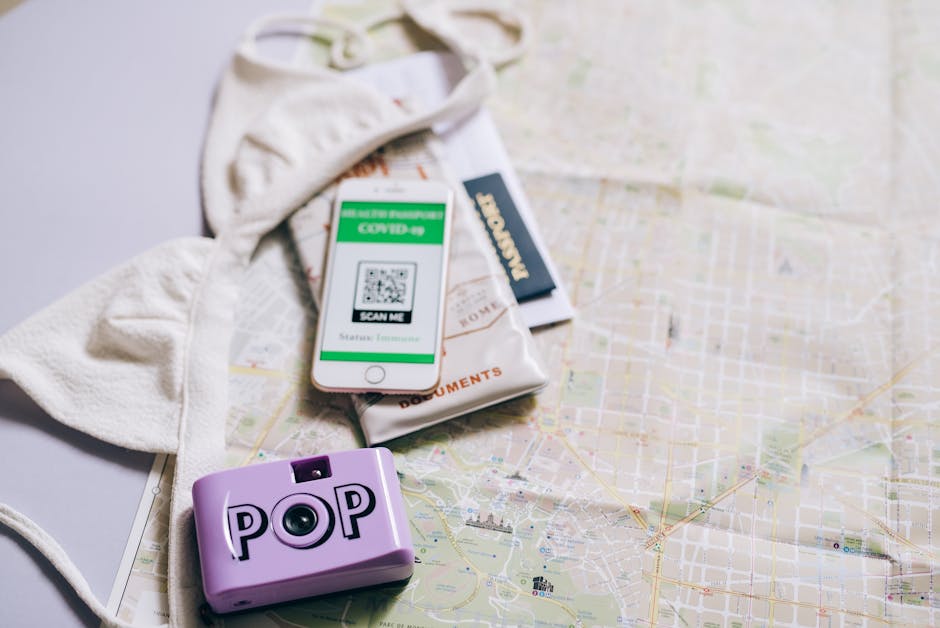
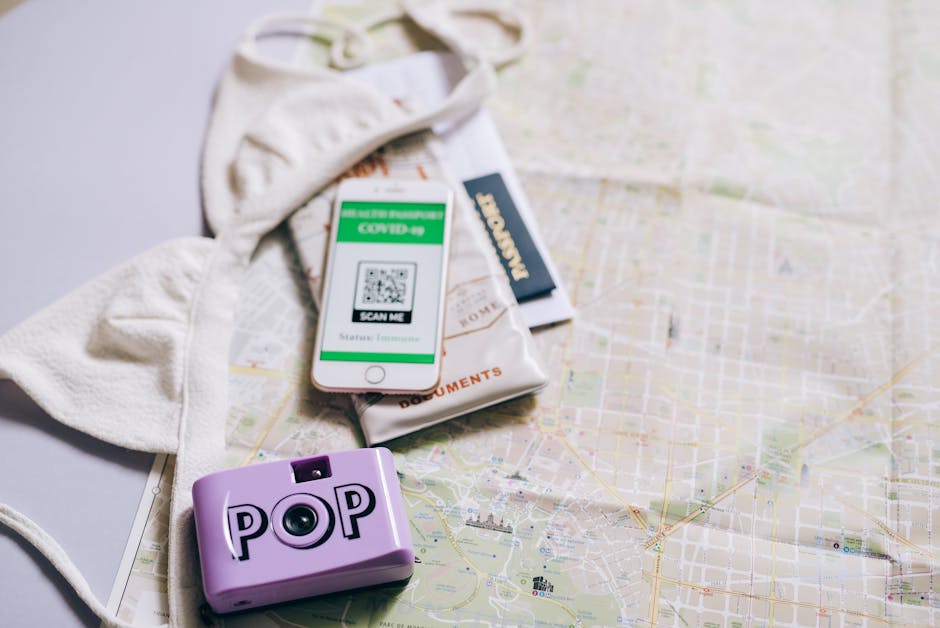
By early 2020, the hardware was ready. Then restaurants, venues, offices, health systems, and governments suddenly needed touchless ways to move people from a physical place to a digital record.
A menu could become a sticker on a table. A check-in form could become a square on a door. A health certificate could become a code on a phone screen or a folded sheet of paper.
Singapore’s SafeEntry system used QR-based check-ins as part of its COVID-19 contact-tracing infrastructure, with GovTech Singapore later describing the system as a national necessity during the reopening period. SafeEntry’s development story shows how quickly QR codes moved from convenience to civic infrastructure.
The European Union’s Digital COVID Certificate used a QR code to help verify vaccination, test, or recovery status, and the European Commission says more than 2.3 billion certificates were issued. That was not a restaurant-menu gimmick; it was a continent-scale use of the same basic visual interface.
The same spread created a security problem. In 2022, the FBI warned that cybercriminals were tampering with QR codes to redirect victims to malicious sites that could steal login or financial information. The square had become familiar enough that attackers could use familiarity against people.
What the pattern is doing when the camera sees it
The three big corner squares tell the scanner where the code is. Smaller alignment patterns help the scanner compensate when the code is printed on a curved surface or photographed from an angle.
Timing patterns help the reader measure the grid. The rest is data and error correction, packed into modules that look random to a human eye but are orderly to the decoding software.
QR codes use Reed-Solomon error correction, which is why a code can often survive scratches, stains, or a small logo placed over part of the square. Denso Wave’s error-correction explainer notes that the recovery capacity depends on how much correction data is built into the code.
That tolerance is why designers can get away with branded QR codes. The logo is not magic. It is damage the code has been built to survive.
The factory square on the table
There is a clean line from the Toyota-linked production floor to the restaurant table, but it is not a straight line. The code was invented in 1994, opened for standardized use, adopted in industrial settings, standardized internationally, ignored or mishandled in many consumer campaigns, then revived by cameras that finally made scanning feel effortless.
That is why the sticker on the table feels both new and old. The phone makes it look like a smartphone-era object, but the geometry belongs to a factory problem from the early 1990s.
The next time a waiter points to a small square on the corner of a table and says the menu is there, the thing being scanned is a decades-old industrial tracking symbol made for car parts, kept open enough to spread, and finally made ordinary by the small camera already waiting in almost everyone’s hand.
