


Key Points
- Mandatory student fees can add thousands of dollars on top of advertised tuition. At SMU, the general student fee alone is set to reach $8,080 per year in 2026-27.
- Some public universities charge mandatory athletic fees of $2,000 to $3,000 per student. James Madison University pulled in a record $55.53 million from mandatory student fees for athletics in 2024, with 73% of its athletic budget covered by student fees.
- Many elite private schools require a separate “student contribution” of $2,000 to $5,000 a year that financial aid will not cover, even for families with $0 expected family contribution.
Families comparing colleges usually start with the published tuition number. That number is rarely what they will actually owe. While most families don’t pay sticker price, another line item is becoming a shocking addition: fees.
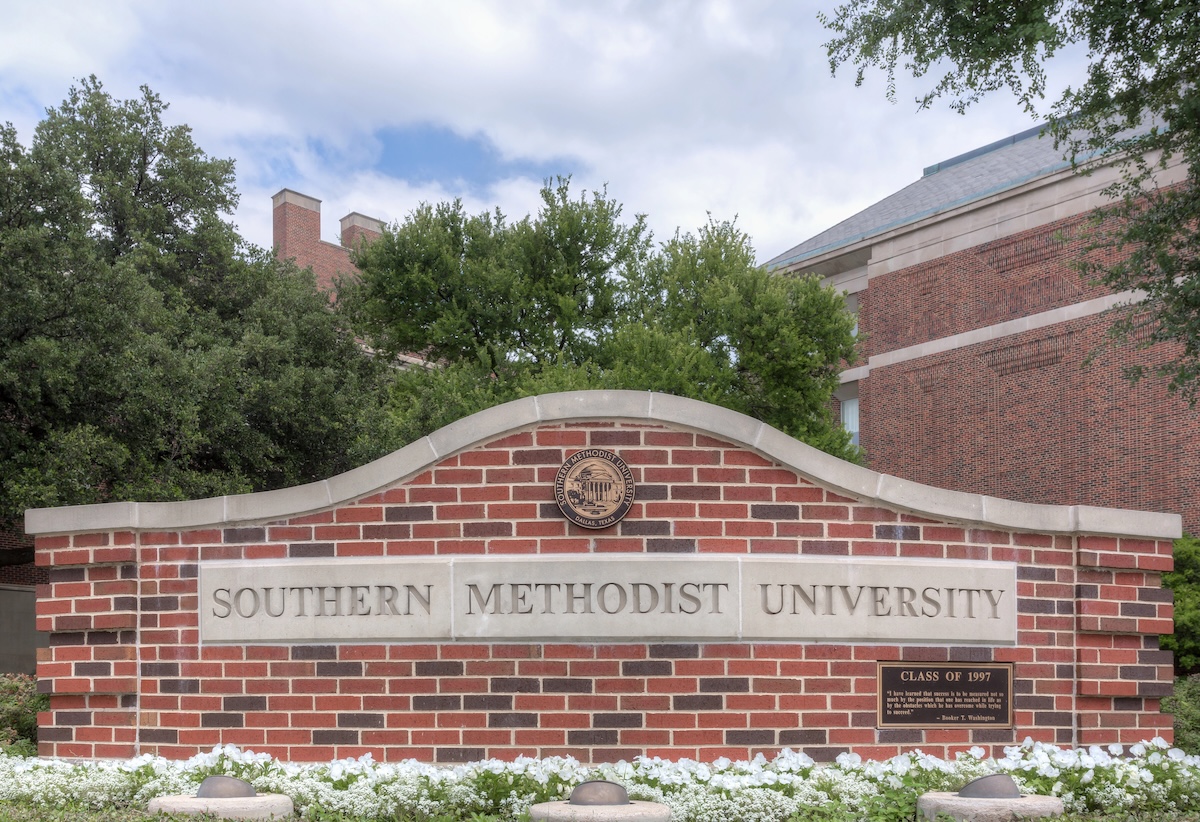
Buried in the fine print, the mandatory student fee can add $1,000, $4,000, or even $8,000 to the annual bill before housing and food. At Southern Methodist University (SMU), the general student fee is rising to $4,040 per term in 2026-27, or roughly $8,080 across two semesters, on top of $63,376 in undergraduate tuition and fees published for 2026-27.
Stack on the other charges colleges break out from headline tuition (recreation fees, student health fees, transit fees, technology fees, athletic fees) and the gap between sticker tuition and real out-of-pocket cost can run into five figures. For families building a college budget, the math gets harder still when a private school also requires a student or parent contribution that financial aid is not covering.
These are the costs that make true apples-to-apples comparisons between schools almost impossible without a spreadsheet.
Would you like to save this?
Why Mandatory Fees Exist In The First Place
Mandatory fees are not new, and most have a specific (and usually helpful) purpose. The University of Pittsburgh’s Computing & Network Services fee pays for campus Wi-Fi, Canvas Learning Management costs, cybersecurity, and printing. Transit fees at the University of Colorado Boulder underwrite unlimited regional bus and rail passes for students. Health and wellness fees fund counseling, mental health services, and on-campus clinics. For example, Tufts University’s Health and Wellness Fee is $1,238 for 2025-26 and cannot be waived.
But why not just roll these into tuition and not surprise families? Well, several forces push schools to keep these charges separate.
The first is dedicated funding. Fees create earmarked revenue streams that cannot be pulled into the general operating budget. Many state legislatures require this separation at public universities. Furthermore, many times the loans used to fund a project are based on being repaid by these mandatory fees. For lenders, this is win-win. For colleges, it’s an easy way to guarantee revenue for new projects.
The second is governance. At many institutions, mandatory fees are reviewed or approved by student government. That gives students a voice (and sometimes political cover for the administration) when fees rise.
The third is rankings and price perception. Most college shoppers anchor on tuition. By holding the line on tuition while letting fees climb, schools can protect their sticker-price position relative to peers. Higher-education researcher Robert Kelchen has noted that at some institutions, when tuition rises, fees fall (and when tuition is frozen, fees rise) suggesting administrators often treat the two as interchangeable buckets.
A related force: federal and state “free college” proposals typically cover tuition, not fees. That gives any school operating in a free-tuition environment an incentive to push more cost into the fee column.
None of this is technically hidden, but it is rarely surfaced in admissions marketing.
Average Fee Range
The College Board’s Trends in College Pricing report puts average published tuition and fees for the 2025-26 academic year at:
- $11,950 for public four-year in-state students
- $31,880 for public four-year out-of-state students
- $45,000 for private nonprofit four-year institutions
- $4,150 for public two-year students
The College Board reports tuition and fees as a single bundled figure, which is part of the problem. It makes the fee portion invisible to families running comparisons. State audits provide more granular data.
A 2024 Virginia legislative review found that mandatory non-instructional fees at the state’s public universities averaged $3,502 per year, roughly one-third of total in-state tuition and fees.
At the University of Virginia, in-state undergraduates pay $3,870 in mandatory fees on top of $16,843 in tuition for the College of Arts & Sciences in 2026-27. Out-of-state UVA students pay $4,552 in mandatory fees.
At Auburn University, the Student Services Fee runs $983 per semester, then there are professional fees or program fees depending on your college.
Private schools generally bundle more costs into tuition, but not always. SMU is one example. Tufts charges its health and wellness fee separately. Other private institutions break out activity fees, technology fees, and orientation fees that show up only on the bill.
Why Families Need To Understand The Fee Structure
Several categories of fees deserve a closer look during the college search.
Athletic fees at mid-major public universities are where the math gets ugly. A Chronicle of Higher Education and Huffington Post investigation found that 180 of 201 Division I public athletic departments ran budget shortfalls, with student fees and other subsidies covering more than $10 billion of those gaps over five years.
James Madison University, for example, labels it’s fee the Comprehensive Fee, which for 2026-26 was $3,111. This fee breaks down as $2,456 for intercollegiate athletics, $1,236 for auxiliary services, $983 for student activity, $861 for facilities, $306 for student health services, and $146 for transportation services.
According to reports, the university collected $55.53 million in mandatory athletics fees in 2024 — the highest total of any public school in the nation. Roughly 73% of JMU’s athletic budget comes from student fees.
Old Dominion University is breaking out out the mandatory comprehensive fee from its tuition for 2026-27. They’re labeling it as a mandatory “Auxiliary Tuition Fee” at $154 per credit out. The result is a lowering of “Tuition” from $408 per credit hour in 2025-26 to $281 per credit hour in 2026-27. But these fees are not optional. Adding back the fees would actually be a $435 per credit hour tuition rate.
General student services and program fees can rival a year of community college tuition on their own. SMU’s general student fee is climbing to roughly $8,080 a year in 2026-27. The University of Southern California (which ranks #7 on the most expensive colleges, charing $75,384 in tuition and fees for 2026-27) bundles many services into its published number but separately charges program fees that can add thousands more.
Specialty fees can also stack up quickly inside specific schools. Auburn’s College of Architecture, Design, and Construction adds a $2,160-per-semester professional fee or $4,320 a year. SMU and many other private schools layer course fees on top of the general student fee, ranging from $50 to several hundred dollars per class.
Health, recreation, and transit fees round out the picture. Tufts’ Health and Wellness Fee is roughly $1,238 a year and mandatory for full-time undergraduates. The University of Colorado Boulder charges a Recreation Center Expansion Fee of $106.96 tied to construction bonds students approved back in 2011 — a cost that current and future students continue paying. Transit fees, environmental fees, and student activity fees typically run $25 to $300 each, but they stack.
The Stanford-Style Student Contribution Requirement
Even families who think they’ve cracked the financial aid code can be blindsided by another category of expected payment: the student or parent contribution that schools build into a financial aid award and refuse to cover with their own university grants.
Stanford University requires a Student Responsibility of $5,000 a year for most students on financial aid. That breaks down to $1,500 the student is expected to bring from prior savings or summer earnings, plus $3,500 from part-time work during the academic year. Stanford also expects an asset-based contribution equal to 5% of the student’s reported assets each year. Even families earning under $150,000 (who pay nothing toward tuition) still owe this Student Responsibility.
Other top schools have similar policies, with varying generosity:
- Yale University historically expects $1,650 a year from summer earnings for freshmen, $2,150 for upperclassmen.
- Brown University sets the highest published summer earnings expectation in the Ivy League: $2,950 via work-study and $2,700 to $2,900 from summer earnings.
- Harvard College eliminated its summer work expectation, but students still pay a term-time work expectation toward personal expenses.
The point of these contributions, schools say, is to give students “skin in the game.” Whether or not that philosophy holds water, the practical effect is real: even if you get a generous financial aid package, you may still owe money.
For families relying on outside scholarships, there’s another twist. Many institutions use those outside scholarships to reduce the student’s loan and work-study allocations before touching grant aid, which can leave the family no better off financially. Make sure you understand scholarship displacement.
What This Means For Families
The headline tuition number on a college’s admissions page is a marketing figure. The real price lives on your personal financial aid award, and it includes mandatory fees that often run $2,000 to $8,000 a year on top of tuition.
For lower-income families, this can be challenging. Mandatory fees do not scale with ability to pay. A $3,000 athletic fee falls just as hard on a student receiving a Pell Grant as on a full-pay family.
Research from the Chronicle of Higher Education investigation found that the 50 institutions with the highest athletic subsidies had 44% more Pell-eligible students than the 50 schools with the lowest subsidies — meaning the families with the least ability to pay are often subsidizing sports programs the most.
For middle- and upper-income families, the issue is sticker shock at billing time. A family that picked a school based on a tuition comparison can find itself owing several thousand dollars more than expected once mandatory fees, program fees, and the student responsibility line item are tallied up.
How Families Can Plan For The Real Cost
A few habits can help families build the right college list from the start.
- Make sure you’re looking at the full potential bill: tuition, mandatory fees, course fees, housing, meal plans.
- Add fees to your sticker-price comparisons. When comparing School A against School B, compare tuition plus all mandatory fees side by side. At public universities in particular, that comparison can flip the ranking on cost.
- Read the financial aid award letter line by line. Look for any “expected student contribution,” “summer earnings expectation,” or “term-time work expectation.” Those are real cash obligations the school will not cover.
- Check whether the school promises to meet 100% of demonstrated financial need. Most do not. The gap is called unmet need, and the family pays it on top of any expected contribution.
- Ask about fee waivers and opt-outs. A small number of fees (health insurance is the most common) can be waived with proof of equivalent coverage. Most mandatory fees cannot.
The federal Student Aid Index is a starting point, not the actual price you’ll pay for college out of pocket. Tuition isn’t the price of college either. The real number is whatever the school’s billing office charges after fees, program charges, contributions, and unmet need.
The most useful number to write down is not the one printed in the brochure. It’s the total billed amount on last year’s actual student account statement at the schools on your list. Some schools post sample bills. The rest, you have to ask or search for.
Don’t Miss These Other Stories:
What Colleges Secretly Look For In Students For Admission
What Families Really Pay For College Out Of Pocket
How To Read A Financial Aid Award Letter And Package
Editor: Colin Graves
The post How Mandatory College Fees Like SMU’s $8,080 Catch Families Off Guard appeared first on The College Investor.
