


The student loan overhaul is now finalized. This week, the Education Department published its landmark rule implementing the new borrowing caps, repayment plan changes, and program eliminations that Congress passed last summer in the One Big Beautiful Bill Act. With a July 1 effective date just two months away, the clock is now ticking for borrowers, families, and financial aid offices alike.
Beyond the loan changes, HBCUs made history by launching the first-ever national research coalition aimed at reaching the nation’s highest research designation, a new $10,000 AI degree backed by Khan Academy and TED raised questions about the future of affordable higher education, and a federal court expanded protections for colleges fighting the administration’s admissions data demands.
Here’s a quick look at the most important stories shaping higher education and student finances this week for May 1, 2026.
🎓 Headlines at a Glance
- The Education Department finalizes landmark regulations implementing new student loan limits and the RAP repayment plan.
- Fifteen HBCUs launch a coalition to pursue top-tier R1 research status, backed by Harvard.
- Khan Academy, TED, and ETS announce a sub-$10,000 AI-focused bachelor’s degree program.
- A federal court blocks the Education Department’s admissions data demands for 170+ additional colleges.

Would you like to save this?
1. Education Department Finalizes Loan Limits and Repayment Plan Changes
The U.S. Department of Education published its final rule implementing the student loan provisions of the One Big Beautiful Bill Act on April 30, with formal publication in the Federal Register on May 1. The rule received more than 80,000 public comments.
The major provisions taking effect July 1, 2026 include new annual and aggregate borrowing caps for Parent PLUS loans ($20,000/year, $65,000 lifetime), the elimination of Grad PLUS loans (replaced by capped Direct Graduate loans), a new $257,500 lifetime borrowing cap, the launch of the Repayment Assistance Plan (RAP), and expanded Pell Grant eligibility for short-term workforce programs. Provisions related to rehabilitation, deferment, and forbearance take effect July 1, 2027, and the sunsetting of legacy repayment plans (including PAYE and ICR) takes effect July 1, 2028.
We have a full breakdown of the final rule here.
➡️ Impact: This is the most significant structural change to federal student lending in a decade. If you’re a current or incoming student, a parent planning to borrow, or a borrower still on the SAVE forbearance, the July 1 date is approaching fast. Review your borrowing options, understand whether your loans fall under old or new rules, and use our RAP calculator to estimate what your payments could look like under the new system.
2. 15 HBCUs Launch National Coalition to Pursue Top Research Status
Fifteen historically Black colleges and universities have formed the Association of HBCU Research Institutions (AHRI), a first-of-its-kind coalition aimed at helping its members achieve R1 Carnegie Classification, the highest research designation in American higher education.
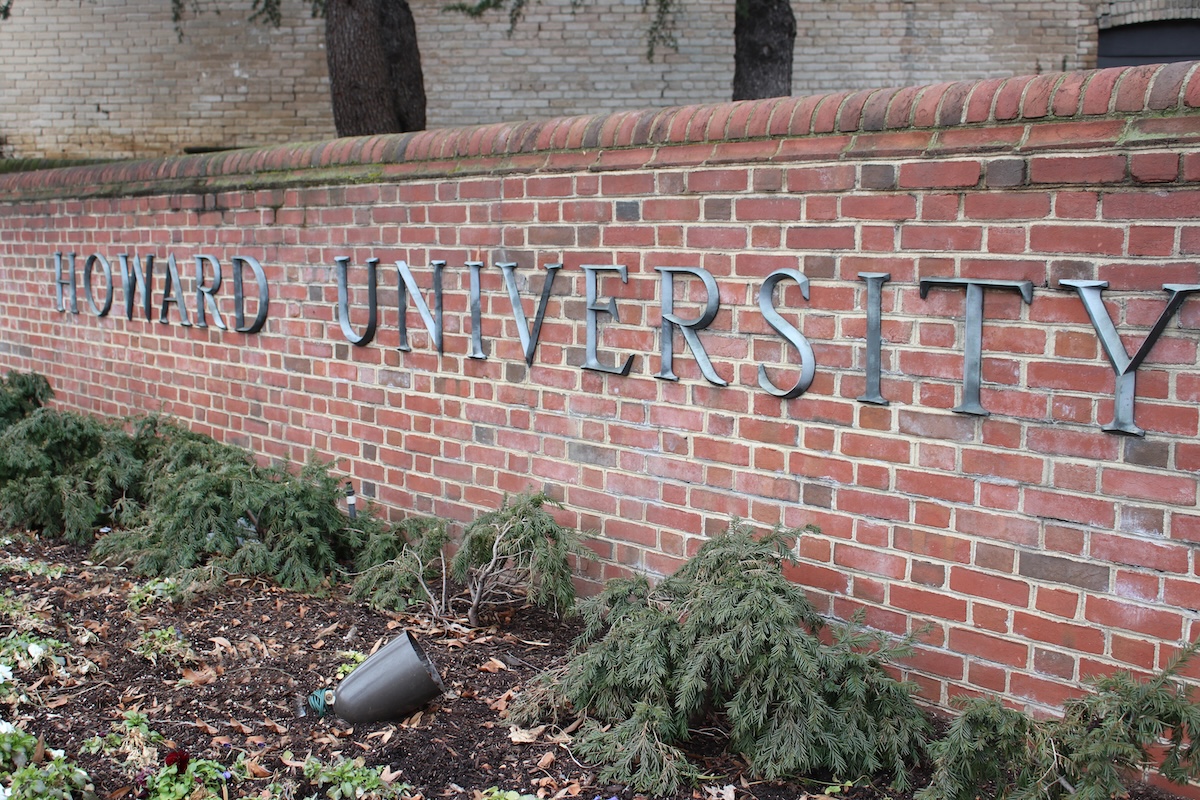
The coalition launched April 29 at Howard University, the only HBCU that currently holds R1 status. Thirteen of the remaining member institutions hold R2 classification. Together, the AHRI schools account for 50% of all competitively awarded federal research funding among HBCUs. Harvard University announced a three-year, $1.05 million grant to support the effort through its Legacy of Slavery Initiative, and the group will be headquartered at the Association of American Universities offices in Washington, D.C.
R1 status matters because it unlocks significantly more federal research funding and makes it easier to recruit top faculty and graduate students. Advocates also noted that HBCUs could focus on research areas that are underrepresented at other institutions, including diseases that disproportionately affect Black communities.
➡️ Impact: For prospective students (especially those considering graduate school or research careers) this coalition could meaningfully expand the range of institutions offering top-tier research opportunities. It also signals a long-term investment in HBCU infrastructure that could improve outcomes, resources, and institutional stability at schools that have historically been underfunded relative to their peers.
3. Khan Academy, TED, and ETS Announce Sub-$10,000 AI Degree
Khan Academy, TED, and the Educational Testing Service (ETS) announced the Khan TED Institute, a new online program that aims to offer a bachelor’s degree in applied AI for under $10,000.
The program is built around a competency-based model, meaning students advance by demonstrating mastery rather than logging classroom hours. Organizers say the degree could be completed in two to three years. Corporate partners including Google, Microsoft, Accenture, McKinsey, Bain, and Replit are helping shape the curriculum to align with employer demand.
There’s a major caveat: the Khan TED Institute is not yet accredited, which means it cannot currently grant degrees or access federal financial aid. The organizers say they are pursuing accreditation and expect to open applications within 12 to 18 months, with a target launch in 2027. Some higher education experts have expressed skepticism about whether a competency-based, AI-centered curriculum can deliver the same value as a traditional degree, particularly before accreditation is secured.
➡️ Impact: This is worth watching but not worth banking on — yet. If the program achieves accreditation and delivers on its promise, it could offer a genuinely affordable pathway to a degree in a high-demand field. But until it’s accredited, students would not be able to use federal student loans or Pell Grants to pay for it, and employers may be slow to recognize an unaccredited credential. For now, treat this as an interesting development, not a decision to delay your current education plans.
4. Court Expands Block on Education Department’s Admissions Data Demands
A federal court expanded its injunction on April 27, blocking the Education Department from requiring more than 170 additional colleges to submit detailed admissions data broken down by race and sex while a lawsuit challenging the survey plays out.
This builds on the preliminary injunction issued in early April that halted data collection at public institutions in 17 states. The expanded order now covers private colleges and universities that had joined the legal challenge, including members of the Association of American Universities and other higher education groups.
The administration had required institutions to submit the data retroactively for seven years, with the threat of Title IV penalties (including loss of federal financial aid eligibility) for schools that didn’t comply.
The court has found the rollout process was rushed and lacked proper administrative procedure. The underlying legal question (whether the Education Department has the authority to collect this data and on what timeline) remains unresolved.
➡️ Impact: For students and families, the practical effect is that colleges are not currently being forced to turn over years of applicant data. But the broader fight over how the federal government uses Title IV funding as leverage over admissions practices is far from settled. This is a story to continue watching, especially as the Supreme Court’s upcoming rulings on transgender student-athlete cases could reshape how Title IX is interpreted across higher education.
Related Reading:
$180 Billion in Student Loans Are Now in Default, New Federal Data Shows
Low-Earning Degrees Will Soon Lose Access to Federal Student Loans
$5,250 of Employer Student Loan Assistance Is Tax-Free
Editor: Colin Graves
The post This Week In College And Money News: May 1, 2026 appeared first on The College Investor.
