

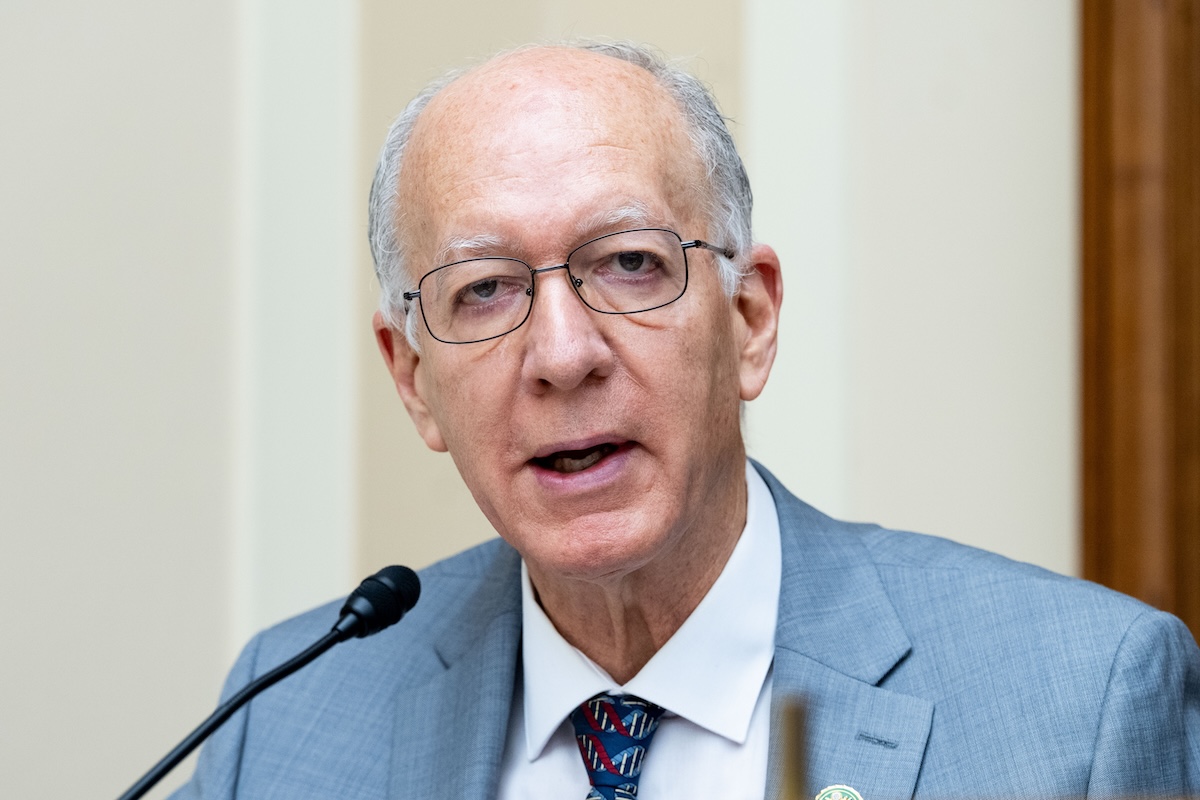
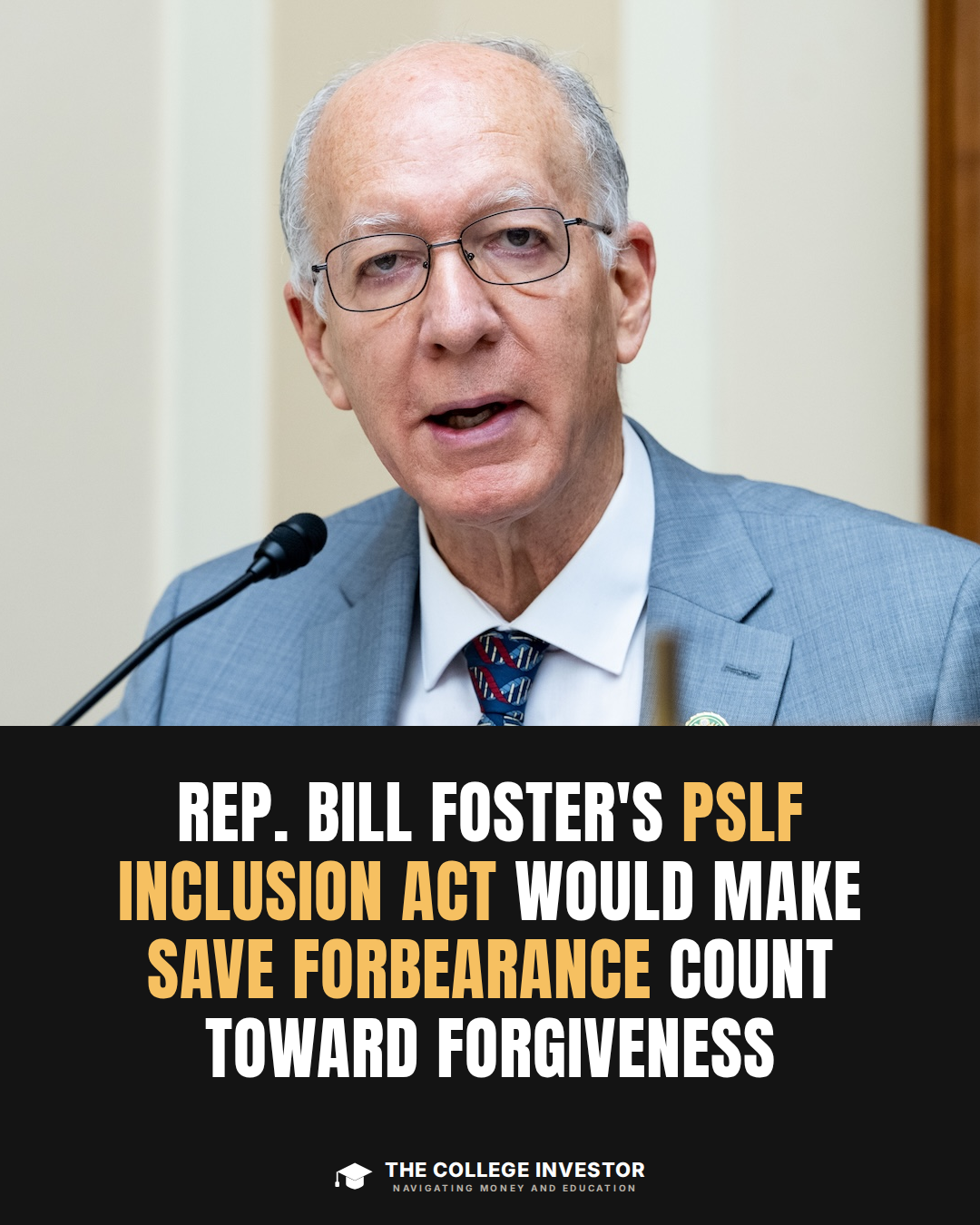

Reps. Bill Foster (D-IL) and Brian Fitzpatrick (R-PA) introduced the Public Service Loan Forgiveness Inclusion Act of 2026, which would update what counts as a qualifying payment under Public Service Loan Forgiveness in two ways: it would let payments under graduated, extended, and the new tiered standard plans count during a borrower’s first 60 months, and it would treat months spent in administrative forbearance as qualifying payments for borrowers working in public service.
It was referred to the House Committee on Education and Workforce the same day it was introduced, with nine cosponsors.
This first provision is a win for many borrowers who’ve found themselves in the wrong repayment plan (especially graduated – which we’ve called a trap). These borrowers have seen their payment counts drop as a result.
The second provision is especially important for the roughly 7 million borrowers who spent more than two years in the SAVE forbearance. Under current law, those months earn zero PSLF credit unless the borrower buys them back. Under this bill, they would count automatically, with no lump-sum payment and no application.
Why It Matters
The SAVE forbearance began in July 2024 when courts blocked the plan, and it has been ongoing until servicers started sending 90-day exit notices on July 1, 2026.
A public servant who stayed in it the entire time lost more than 24 months toward the 120 payments PSLF requires, and interest has been accruing on those balances since August 1, 2025.
The only current fix is PSLF Buyback, a program that requires 120 months of certified employment before you can even apply, a lump-sum payment based on what you would have owed under an eligible income-driven plan, and a wait that reader reports put at 20 to 24 months.
The math on buyback also catches people off-guard. After the court settlement barred the Department from using REPAYE as a calculation basis, buyback amounts shifted toward the older IBR formula, which produces a higher payment for borrowers whose loans predate 2014.
A borrower buying back 24 months at a $300 IBR-equivalent payment would owe $7,200 in one check. This bill would erase that bill entirely for any month the borrower can document public service employment.
What The Bill Would Change
Administrative forbearance would count. Section 2(b) amends the definition of “monthly payment” in 20 U.S.C. 1087e(m)(3) to include a payment the borrower “would have made” during any period when repayment was suspended by administrative forbearance and the borrower held a public service job. That language covers the SAVE forbearance directly. Borrowers would still need to certify employment for those months, but the buyback lump sum and application would disappear.
The first 60 payments would count regardless of plan. Current law only counts payments under the graduated and extended plans only if they are at least as large as the 10-year standard amount. The bill drops that floor for a borrower’s first 60 months. From month 61 forward, the existing rule returns – eligible repayment plan. This matters because the Education Department is currently rescinding PSLF credit from borrowers who were on the extended or graduated plans, on the grounds that those months never qualified.
The tiered standard plan would count. The bill adds the standard plan under subsection (d)(7)(A)(i), which is the tiered standard plan created for loans issued on or after July 1, 2026. That plan has repayment terms of 10 to 25 years based on balance and is not PSLF-eligible today, which means new borrowers who pick it get no forgiveness credit.
Borrowers would get notice. The Department would have 180 days after enactment to tell every Direct Loan borrower about both changes and explain how to switch plans.
Where There Are Still Questions
The applicability clause in Section 2(c)(2) says the 60-payment rule applies to borrowers who have made fewer than 120 payments as of enactment. There is no matching clause for the forbearance provision, and the text does not state whether it reaches forbearance months that occurred before the bill became law. The plain reading of an amended definition, combined with the mandatory notice to all borrowers, points toward retroactive credit for the SAVE period, but a court or Department rulemaking would have to officially settle that question. Borrowers should not assume it until the language is clarified or the Department issues guidance.
The bill also does not address the PSLF Buyback program itself. Borrowers already in the buyback queue of roughly 88,000 requests would presumably see those requests become moot if the forbearance months counted on their own, but nothing in the text says how the Department should handle pending applications or lump sums already paid. Again, another rulemaking issue that would likely have to be resolved.
How This Connects
Foster’s office says 97% of public servants who applied for PSLF have been denied, a figure that dates to the program’s early years and predates the current numbers. The latest tracking shows over 1 million borrowers have received their loan forgiveness under PSLF, and roughly 120,000 are on track each year for the next few years.
The wrong-payment plan problem is still alive, though. Our reporting on the Department’s August payment-count corrections found borrowers losing six or more months because they had been on extended or graduated plans that were never eligible. This bill would restore that credit for anyone under 60 payments, though borrowers past that mark would still lose those months.
Being in the wrong repayment plan is also something that Temporary Expanded Public Service Loan Forgiveness (TEPSLF) solves for, but we estimate that roughly half of the program’s funds have already been exhausted. There may be only 2 or 3 years left of this benefit.
For SAVE borrowers, the bill would fix the fact that the forbearance does not directly count for PSLF, and buyback is the only workaround.
What’s Next
Foster has introduced a version of this bill five other times. The 2026 version is the first to address administrative forbearance directly, and it carries support from the American Federation of Teachers and the American Council on Education.
The signal to watch is whether the Education and Workforce Committee schedules a hearing before the 119th Congress ends on January 3, 2027. Without one, the bill dies with the session and would need to be reintroduced. SAVE borrowers face their own deadlines in the meantime: the first 90-day exit notices expire September 29, 2026, and the last deadline lands around March 31, 2027.

Robert Farrington is the founder of The College Investor and is widely recognized as one of the nation’s leading voices on student loan debt and saving for college. He holds an MBA from UC San Diego Rady School of Management and has spent over 15 years researching, writing, and advising on student loans, 529 plans, financial aid programs, and saving and investing for young professionals.
Robert has been featured in the The New York Times, The Wall Street Journal, The Washington Post, NBC News, and Forbes, where he has been a regular personal finance contributor for over a decade. His work combines both professional expertise and personal experience – he successfully navigated his own student loan repayment journey and has helped thousands of readers do the same.
He is committed to making the intersection of personal finance and education transparent and accessible. You can learn more about Robert on the About Page or on his personal site RobertFarrington.com.
